
A solar CRM tracks every lead from the first phone call to the signed contract and the final permission to operate, so nothing falls through the cracks between sales, design, permits, and installation.
For Texas solar companies, that matters because homeowners compare several installers at once, and the company that answers first usually wins the job.
This guide walks through what a solar CRM should track, how fast follow-up should be, and how to pick one that fits a Texas crew.
Why Texas solar companies lose leads they already paid for

Texas is the second largest solar market in the country, with 55,125 megawatts installed and 676 solar companies competing for the same homeowners, according to the Solar Energy Industries Association.
That growth brings leads, but it also brings a problem most installers know well. The phone rings, the form comes in, and then the lead waits.
A lead that waits is a lead that talks to your competitor. Homeowners shopping for solar almost always compare several installers before they sign anything.
EnergySage reports that people who compare multiple quotes generally save 20 percent or more, so comparison shopping is the normal behavior, not the exception.
The lead arrives, then nothing happens
The most common leak is simple. Nobody owns the first reply. The form lands in a shared inbox, the call goes to voicemail after hours, and by Monday morning the homeowner has already booked a survey with someone else.
Research from Harvard Business Review makes the cost clear. In an audit of 2,241 United States companies, the average first response to a web lead took 42 hours, and 23 percent of companies never responded at all.
Firms that reached the lead within an hour were nearly seven times as likely to qualify it.
Spreadsheets cannot keep up with a solar pipeline
A spreadsheet can hold names and phone numbers. It cannot tell a rep which leads need a call today, which surveys are booked, or which proposals are waiting for a signature.
When the pipeline lives in three spreadsheets and two inboxes, leads slip through the gaps between them.
That is the job a solar CRM does. It gives every lead one record, one owner, and one next step, from the first call to the day the system switches on.
What a solar CRM tracks from first call to permission to operate
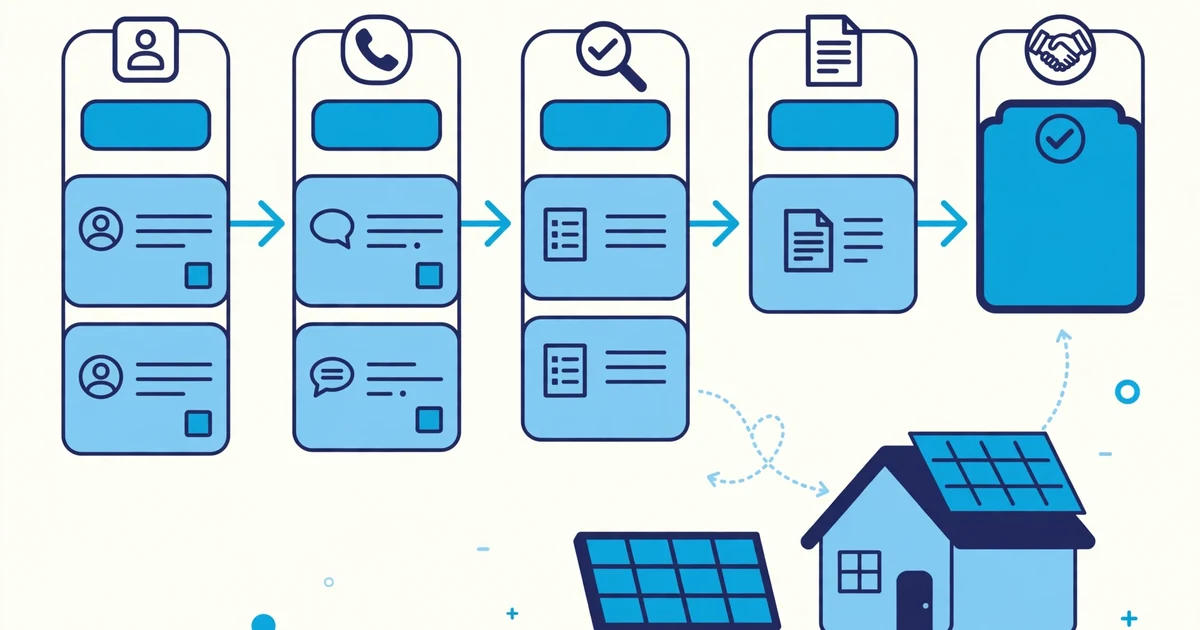
A solar sale is not one step. It is a chain of handoffs between sales, design, permitting and install, and each handoff is a place where a job can stall. A CRM built for solar tracks the whole chain in one place.
The stages most Texas installers use look like this:
- New lead: source, roof details, utility, and budget noted on first contact.
- Site survey booked: date, crew, and roof measurements confirmed.
- System designed: panel count, inverter, and production estimate attached.
- Proposal sent: price, financing, and savings shown side by side.
- Contract signed: deposit, documents, and install window recorded.
- Permit filed: city or county permit, HOA approval, and utility application tracked.
- Install scheduled: crew, materials, and inspection date set.
- Permission to operate: utility approval received and system switched on.
One record per roof, not per phone call
Every call, email, text and site note belongs on the same record. When a homeowner calls back six weeks later, anyone on the team can see the full story in seconds. Nobody has to ask the homeowner to repeat it.
Every stage needs an owner and a next step
A stage without an owner is a stage where work stops. The CRM should show who owns each job and what happens next, with a date attached. If a permit has sat untouched for five days, the system should say so before the homeowner has to ask.
The same job-tracking discipline works in other trades too, as our roofing CRM software guide for managing estimates, jobs and customers shows.
Speed to lead: the first hour decides the deal

Solar shoppers move fast because they are comparing you with two other installers at the same time.
The Harvard Business Review audit found that firms contacting a lead within an hour were nearly seven times as likely to qualify it as firms that waited even an hour longer.
Against firms that waited a day or more, the fast responders were more than 60 times as likely to qualify the lead.
That gap is the whole business case for speed. A solar CRM cannot make a rep faster, but it can make sure the lead reaches a rep in seconds, with the homeowner’s details attached, instead of sitting in an inbox overnight.
A five-minute reply is the standard to aim for
Five minutes is the practical target. The homeowner is still on your website, still thinking about solar, and still holding the phone. Thirty minutes later they are back at work or talking to the next installer on their list.
Automation covers nights and weekends
Solar leads arrive at 9 pm on a Sunday. A CRM with automated replies can confirm the enquiry, ask for the roof details it needs, and book a call for Monday morning.
The homeowner gets an answer at once, and the rep starts Monday with a booked call instead of a cold lead. SMS integration that automates CRM follow-ups handles the after-hours reply without a night shift.
Speed is also why lead scoring matters. Not every enquiry is equal, and a rep’s first call should go to the homeowner with the right roof, the right utility, and a real timeline.
Lead scoring systems that rank every new enquiry put that order in place automatically.
Proposals, financing and the quote comparison problem

A solar proposal is a comparison document. The homeowner will lay it next to two others and look for the better deal.
EnergySage notes that homeowners who compare multiple quotes generally save 20 percent or more, which means your proposal has to win on clarity as well as price.
The CRM should build the proposal from the same record that holds the survey and the design. One click should produce the system size, the price, the financing options and the estimated savings, with no retyping and no version confusion.
Send the proposal the same day as the survey
A proposal that arrives three days after the survey arrives after the competitor’s proposal. Same-day proposals keep the conversation warm and let the rep answer questions while the visit is still fresh in the homeowner’s mind.
The same fast-quote discipline drives results in other trades, as our electrician CRM guide to faster estimates and follow-up shows.
Financing options belong in the CRM record
Cash, loan, lease and power purchase agreements change the numbers completely. The CRM should record which option the homeowner prefers and show the savings for that option, not a generic figure.
When the homeowner asks to switch from a loan to cash, the rep should be able to re-price the job in minutes.
Permits, installs and keeping the homeowner informed

After the contract, the homeowner waits. Permits, HOA approvals and utility interconnection take weeks in Texas, and silence during that wait is what creates anxious phone calls and cancelled jobs.
A solar CRM tracks each approval as its own task with its own date. When the city permit clears, the homeowner gets a text. When the install date moves, the homeowner hears it from you first, not from a crew that never showed up.
Delays feel shorter when the homeowner hears from you
Most homeowners accept a delay they understand. What they do not accept is finding out about it themselves. A short status update each week costs the office two minutes and saves the rep a difficult call later.
Crews need the same record as the office
The install crew should see the same record the sales rep sees: panel layout, roof notes, gate codes, and the homeowner’s questions. When the office and the crew work from different notes, the homeowner ends up repeating the same details twice.
Dispatch and scheduling work the same way in other field trades, as the HVAC CRM guide to scheduling and dispatch logs explains.
After the install: referrals, reviews and the next roof

The cheapest lead a solar company ever gets is a referral from a happy homeowner. The panels are on the roof, the bill has dropped, and the neighbours are asking who did the work. That moment lasts a few weeks, and then it fades.
A solar CRM should prompt the referral ask at the right time: after permission to operate, after the first bill, and again at the one-year check-in. It should also prompt the review request while the experience is still fresh.
Ask for the referral while the panels are still new
A simple text a week after switch-on works better than a letter three months later. The homeowner is still excited, the system is still new, and the neighbour’s question is still recent.
The second sale is cheaper than the first lead
Batteries, EV chargers and panel additions are natural follow-ups for a homeowner who already trusts you. The CRM should flag these at the right time: a year after install for a battery, sooner if the homeowner asked about an electric car.
Each one costs far less to win than a brand new lead.
Texas will keep adding solar, and the installers who win will be the ones who answer first, follow up every time, and keep the homeowner informed from survey to switch-on. A solar CRM is how a small crew does that without hiring a bigger office.
Sources: SEIA Texas solar facts page for Texas capacity, company count and growth projections.
Evidence review of the Harvard Business Review audit of 2,241 companies for response time findings; EnergySage guide to getting solar quotes for quote comparison savings.
Want a CRM that turns solar leads into signed installations?