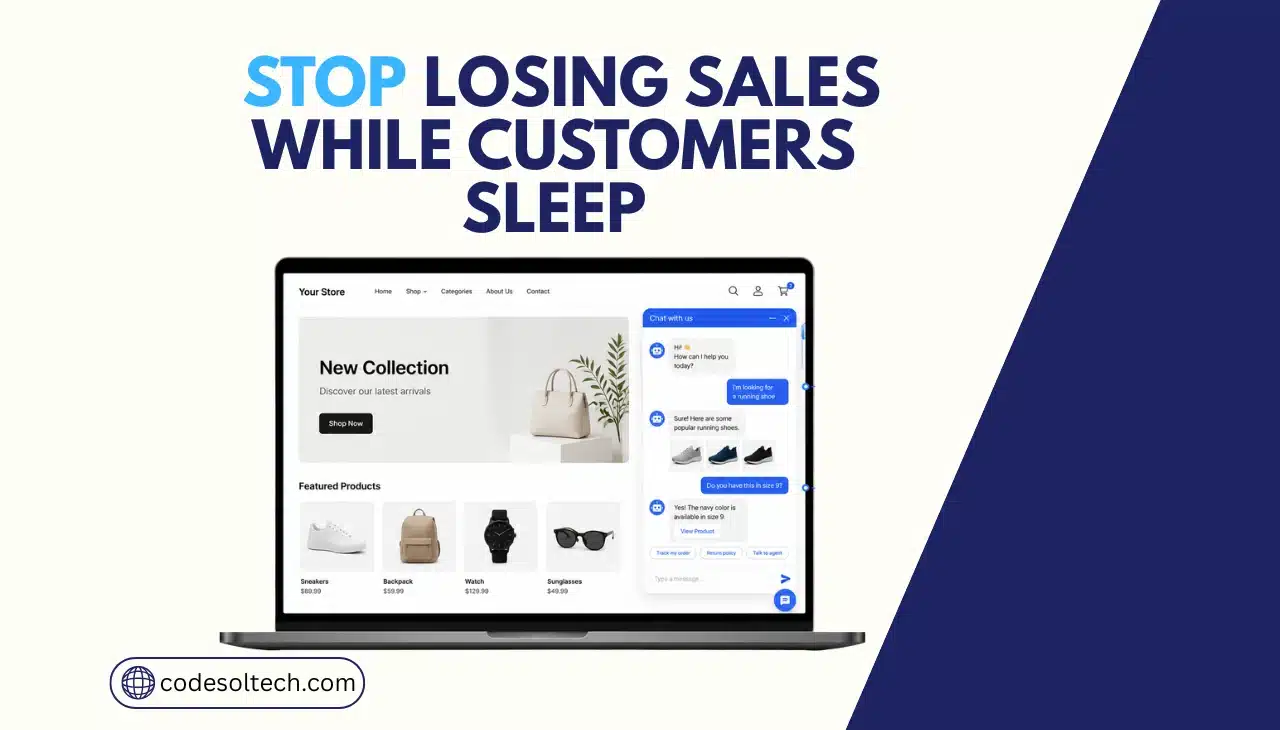
Chatbot integration for ecommerce is the process of connecting a conversational AI tool to a store’s platform, CRM, and payment systems via APIs, so the bot can answer product questions, recover carts, track orders, and escalate to a human agent using live store data rather than static scripts.
An ecommerce chatbot differs from a generic live chat widget in one specific way: it reads structured store data. A generic widget routes a typed message to a human.
An integrated chatbot checks inventory, retrieves a customer’s order status from the OMS, and applies a discount rule from the CRM before responding.
- Product catalog integration for pricing, stock, and specification lookups
- CRM integration for customer history, loyalty tier, and past purchase data
- Order management system integration for shipping and return status
- Payment gateway integration for checkout assistance and upsell prompts
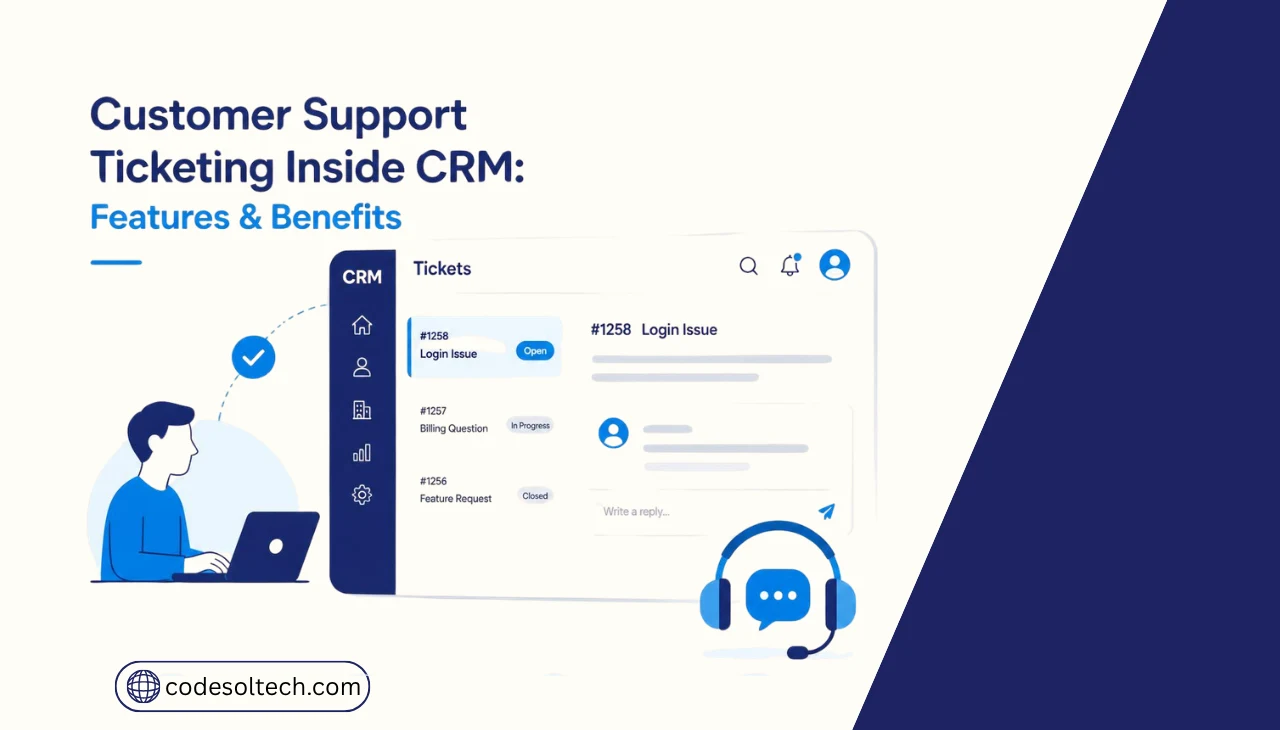
- Help desk integration for ticket creation and human handoff
These five integration points are not optional add-ons; they are what separate a chatbot from a scripted FAQ widget. A store’s underlying ecommerce development architecture determines how easily a chatbot can reach this data.
Headless and microservices setups expose clean APIs a bot can query directly, while older monolithic builds often require custom middleware.
Types of Ecommerce Chatbots
Five distinct chatbot architectures serve ecommerce stores, each suited to a different level of query complexity and integration depth.
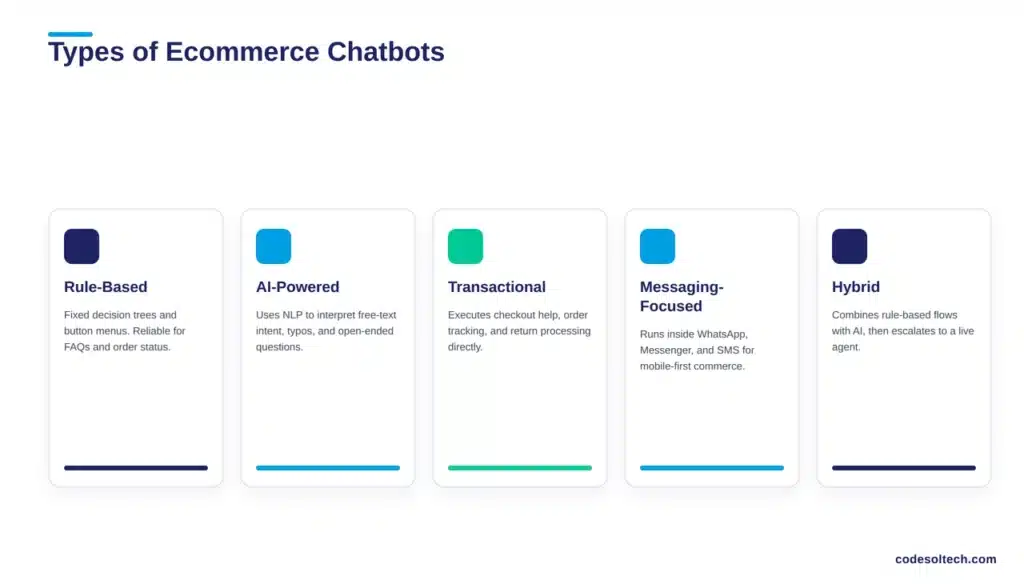
- Rule-based chatbots operate on predefined decision trees and button-based menus. They answer FAQs, order status, and policy questions reliably but cannot interpret open-ended text.
- AI-powered conversational chatbots apply natural language processing (NLP) and machine learning to interpret intent behind free-text or voice queries, including typos and paraphrased questions.
- Transactional chatbots execute specific commercial actions such as checkout assistance, order tracking, and return processing, tightly coupled to the OMS and payment gateway.
- Messaging-focused chatbots run primarily inside WhatsApp Business API, Facebook Messenger, or SMS, and dominate in mobile-commerce-first markets.
- Hybrid chatbots combine rule-based button flows for routine queries with AI-driven handling for complex or emotional cases, then escalate to a live agent with full conversation context.
How Ecommerce Chatbots Reduce Cart Abandonment
The global average cart abandonment rate is 70.22%, calculated from 50 aggregated studies by the Baymard Institute. Chatbots address the two largest documented causes of that abandonment directly.
Unexpected costs and forced account creation. A well-integrated bot works alongside, not instead of, a properly engineered checkout flow architecture.
Baymard’s research attributes cart abandonment to specific, fixable friction points, not lack of purchase intent alone. A chatbot intervenes at the exact moment friction appears, before the shopper closes the tab.
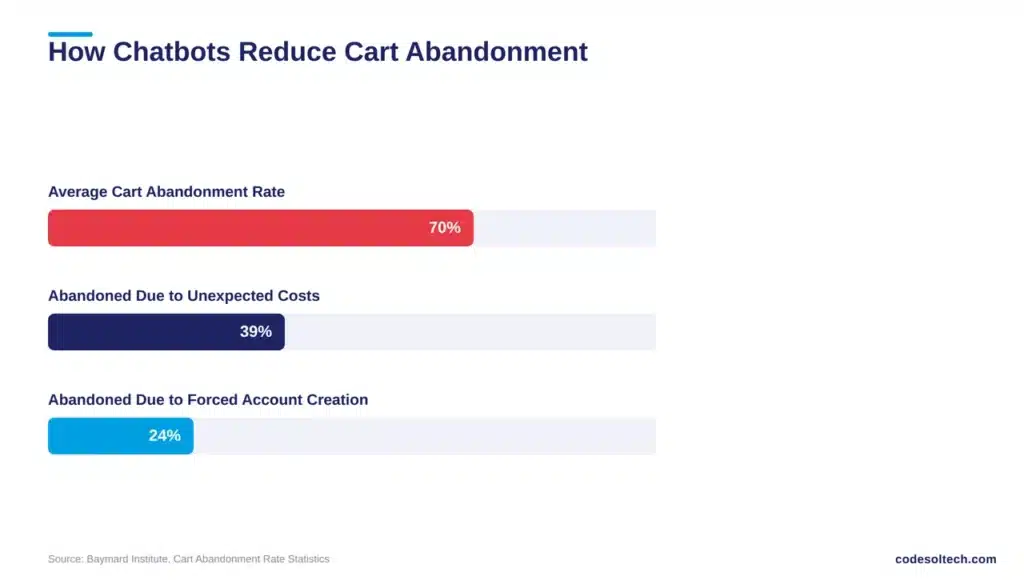
- 39% of shoppers abandon checkout when they encounter unexpected shipping costs, taxes, or fees; a chatbot can surface total cost upfront during the product conversation
- 24% abandon because the store requires mandatory account creation; a chatbot can offer guest checkout guidance in real time
- A chatbot triggered at exit intent or cart inactivity can present a discount code or answer the specific question stalling the purchase, through web pop-up, SMS, or WhatsApp
Recovery through conversational triggers works only on the addressable share of abandonment. Baymard’s data shows a large portion of abandonment is unrelated to friction and reflects browsing behavior, so a chatbot’s cart-recovery function should be measured against the addressable segment, not the full abandonment rate.
Core Use Cases for Ecommerce Chatbot Integration
Ecommerce chatbots operate across five stages of the customer journey, from product discovery to post-purchase support.
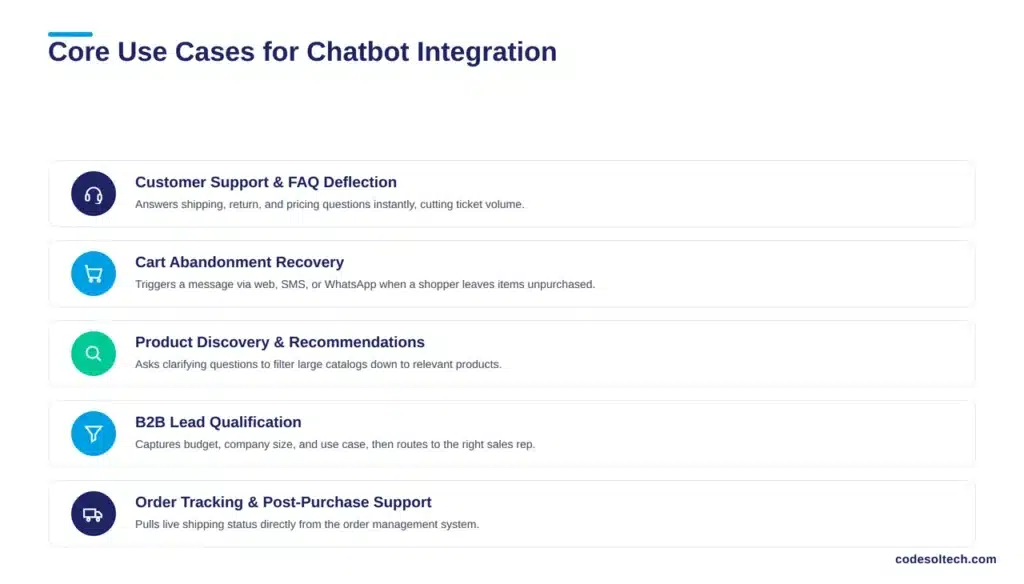
- Customer support and FAQ deflection: the bot answers shipping timelines, return policy, and pricing questions instantly, reducing ticket volume for the human support team.
- Cart abandonment recovery: the bot sends a triggered message through web, SMS, or WhatsApp when a shopper leaves items unpurchased, often paired with a discount code.
- Product discovery and recommendations: the bot asks clarifying questions and filters a large catalog down to relevant SKUs based on stated budget and use case.
- Lead qualification for B2B and high-consideration commerce: the bot captures company size, budget range, and use case, then routes the conversation to the correct sales representative through the CRM. This use case is common on B2B ecommerce portals, where deals involve approval workflows rather than instant checkout.
- Order tracking and post-purchase support: the bot pulls live shipping status from the order management system instead of requiring the customer to search email.
How to Integrate a Chatbot Into an Ecommerce Store?
Chatbot integration into an ecommerce store follows six sequential steps: define the objective, select a platform, connect the APIs, build the knowledge base, test edge cases, and monitor performance post-launch.
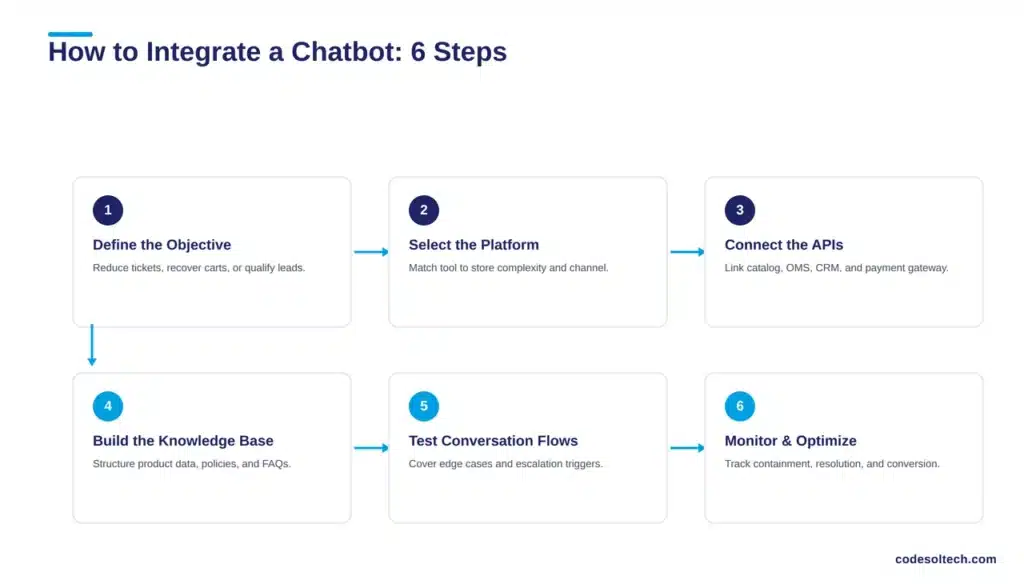
- Define the primary objective. Reducing support ticket volume, recovering carts, and qualifying leads require different bot configurations. A single bot rarely optimizes all three equally.
- Select a platform matched to technical complexity. Shopify and WooCommerce stores typically integrate a chatbot through a native app or plugin. Enterprise stores with custom architecture require direct API-level integration with the OMS, CRM, and payment gateway.
- Connect the required APIs. The chatbot needs read access to the product catalog and order data, and in most configurations, write access to the CRM to log captured leads and conversation history. This step follows the same principles covered in system integration for digital transformation.
- Build and structure the knowledge base. The bot’s accuracy depends on structured product data, current shipping policies, and FAQ content. Outdated or incomplete data produces incorrect answers regardless of the underlying AI model.
- Test conversation flows and escalation paths. Testing must cover ambiguous queries, multi-part questions, and the exact point at which the bot hands off to a human agent with conversation context intact.
- Monitor containment rate, resolution rate, and conversion impact. Post-launch tracking determines whether the bot is deflecting tickets successfully or generating a second layer of unresolved queries.
Ecommerce Chatbot Platforms Compared
Ecommerce chatbot platforms fall into three practical categories based on integration depth and primary channel: storefront live-chat bots, social/messaging bots, and enterprise conversational AI.
The table below compares platform categories by primary strength and typical fit, not individual vendor claims.
| Platform Category | Best Fit | Integration Depth | Primary Limitation |
|---|---|---|---|
| Storefront live-chat + bot (Tidio, ProProfs Chat, Intercom) | Shopify and WooCommerce stores needing fast setup | Native app-level integration with the storefront and help desk | Limited customization outside the platform’s app ecosystem |
| Social and messaging bots (ManyChat, Chatfuel, Engati) | Instagram, WhatsApp, and Facebook Messenger-first brands | API integration with messaging platforms and catalog feeds | Weaker fit for complex, multi-step order management flows |
| Enterprise conversational AI (Drift, custom-built LLM bots) | B2B ecommerce and high-volume support operations | Direct API integration with CRM, ERP, and OMS | Higher implementation cost and longer deployment timeline |
Does Chatbot Integration Increase Ecommerce Conversion Rates?
Chatbot integration increases ecommerce conversion rates when it removes a specific friction point, such as an unanswered product question or an unexpected checkout cost, at the moment the shopper encounters it.
It does not increase conversion rates as a standalone feature disconnected from store data.
85% of retail and ecommerce businesses have implemented chatbots in their operations, according to a 2025 eTail industry survey.
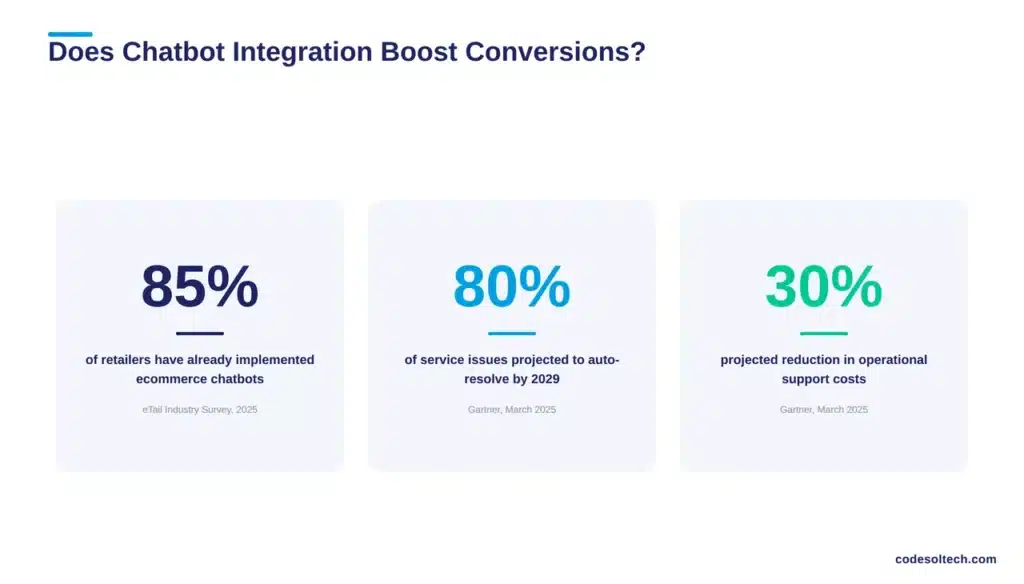
Gartner projects that by 2029, automation will resolve 80% of common customer service issues without human intervention and cut operational costs by 30%, which raises the ceiling on what integrated chatbots can be expected to handle over the next three years.
Adoption at this scale reflects operational necessity, not uniform performance across implementations; the conversion impact depends on integration depth, not the presence of a chat widget alone.
Common Integration Challenges and How to Solve Them
Chatbot integration for ecommerce fails most often for four specific, addressable reasons rather than because the underlying AI model is inadequate.
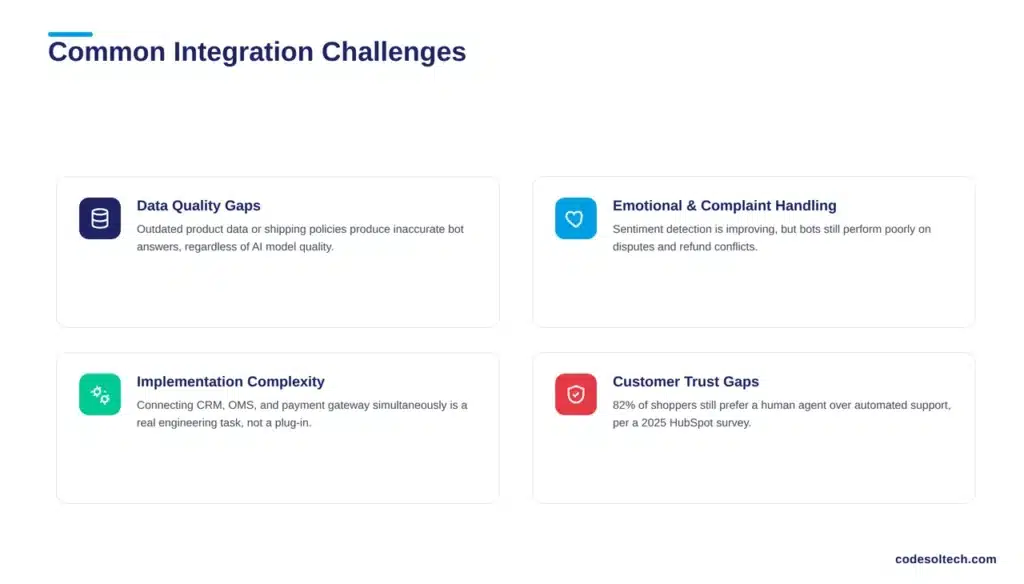
- Data quality gaps: a chatbot answers only as accurately as the product data, shipping policy, and inventory feed connected to it; outdated data produces incorrect responses regardless of AI sophistication.
- Emotional and complaint handling: sentiment detection has improved, but bots still perform poorly on disputes, refund conflicts, and complaints; these queries require a defined escalation trigger, not bot resolution.
- Integration complexity: connecting a chatbot to the CRM, OMS, and payment gateway simultaneously is an engineering task; incomplete integration produces broken conversation flows and inaccurate order data.
- Customer trust gaps: 82% of respondents in a 2025 HubSpot and SurveyMonkey survey said they would prefer help from a human agent over automated support, which makes a visible, fast escalation path a functional requirement, not an optional feature.
Research published in the Journal of Consumer Psychology also found that shoppers prefer chatbots specifically for purchases that carry embarrassment or privacy concerns, which means chatbot placement should account for product category, not apply a single flow across an entire catalog.
Final Words
Chatbot integration works when it connects to real store data, not when it runs a scripted overlay. Match the bot type to the query complexity your store actually receives, integrate it directly with your CRM and order system, and define a clear human escalation path.
Skipping the integration layer is the most common reason ecommerce chatbots underperform.
Need a chatbot integrated directly into your store’s catalog, CRM, and order system, not a bolt-on widget?