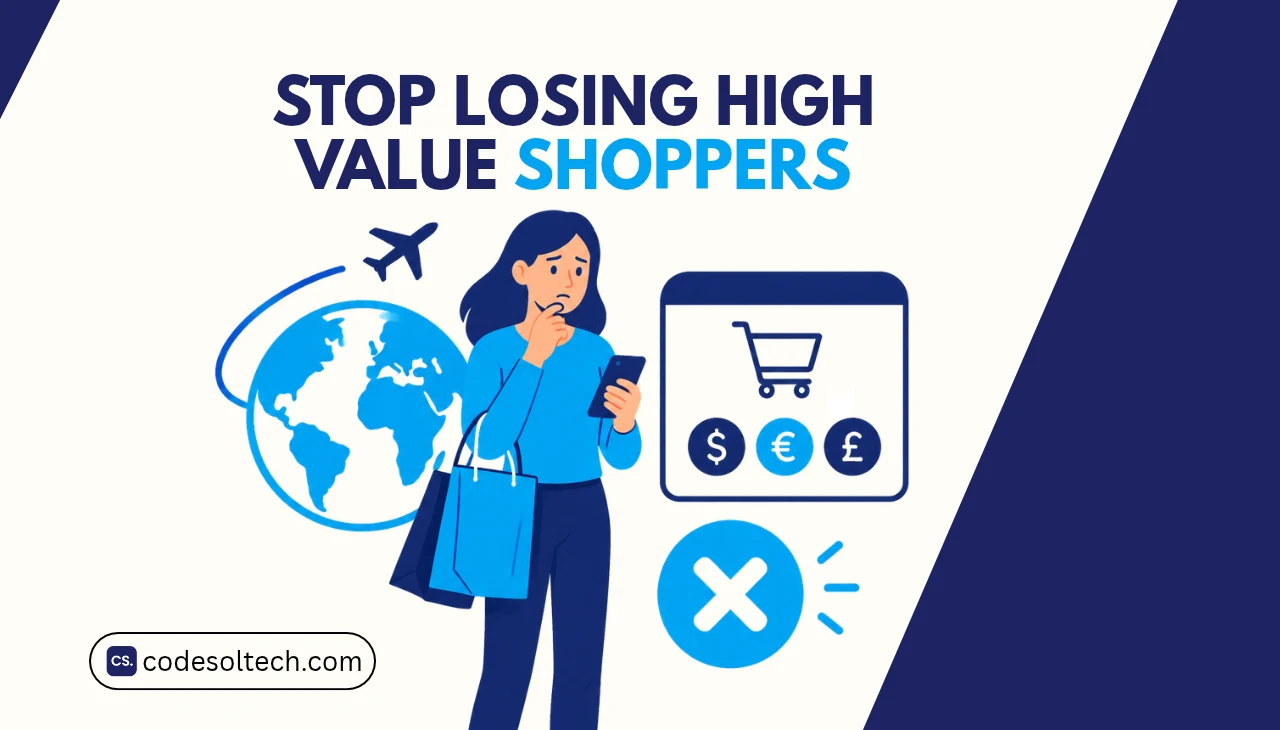
International shoppers often abandon expensive orders because the checkout introduces uncertainty at the worst possible moment. An unfamiliar currency, a delayed payment page, or an unexpected card charge can turn strong purchase intent into hesitation.
High-value customers are especially sensitive because small percentage differences become meaningful on larger orders.
Retailers can protect these sales by treating international checkout performance as a combination of user experience, pricing clarity, payment processing, and technical speed.
Hidden Drop-Off Points in Cart Flows
International checkouts often ask for extra information, redirect customers to unfamiliar pages, or reject address formats that work differently across countries. Each added field gives a shopper another reason to pause.
Test the entire flow with addresses, devices, and payment methods from your main markets. Show delivery estimates before the final step and explain why any unusual information is required.
Retailers should also review failed payment messages. A specific prompt such as “Check your billing postal code” is more useful than a generic decline notice.
When shoppers still leave, a well-designed cart abandonment recovery system can bring them back to the correct checkout stage without forcing them to rebuild their order.

The scale of the problem
Cart abandonment is not a rare edge case. The Baymard Institute averages 50 published studies and puts the documented cart abandonment rate at 70.22%.
Roughly seven of ten carts never become orders. International checkouts carry extra friction on top of that baseline, so they deserve their own testing.
Forcing an account loses shoppers
Account creation is one of the most common extra steps in a checkout. A shopper who only wants to buy once will not always create a password to do it.
A guest vs account checkout comparison shows why letting shoppers finish without an account keeps more of them. Guest checkout suits first-time international buyers best.
The Price Transparency Dilemma
A product may look affordable in the catalog and become far more expensive once conversion rates, shipping charges, and local taxes appear.
For a $1,500 order, even a 3% currency difference adds $45. That gap can undermine trust if the shopper expected the displayed total to remain stable.
Display the shopper’s currency from the product page through the receipt and label the currency code clearly.
Businesses evaluating multi-currency credit card processing should check how rates are set, when conversions occur, and which currencies are available for settlement.
Keep shipping costs and estimated duties visible before payment details are requested. If a charge can’t be calculated in advance, state that plainly and provide a realistic range.
Consistent totals give customers a dependable basis for completing a high-value purchase.
Extra costs are the top reason shoppers leave
In Baymard’s survey of US shoppers, 40% of those who left during checkout said shipping, tax, or fees were too high. Another 12% said they could not see the total up front.
That matches what cross-border research finds. In DHL’s 2026 survey of 29,000 shoppers across 29 countries, 63% said unexpected customs or taxes had caused them to abandon an online purchase.
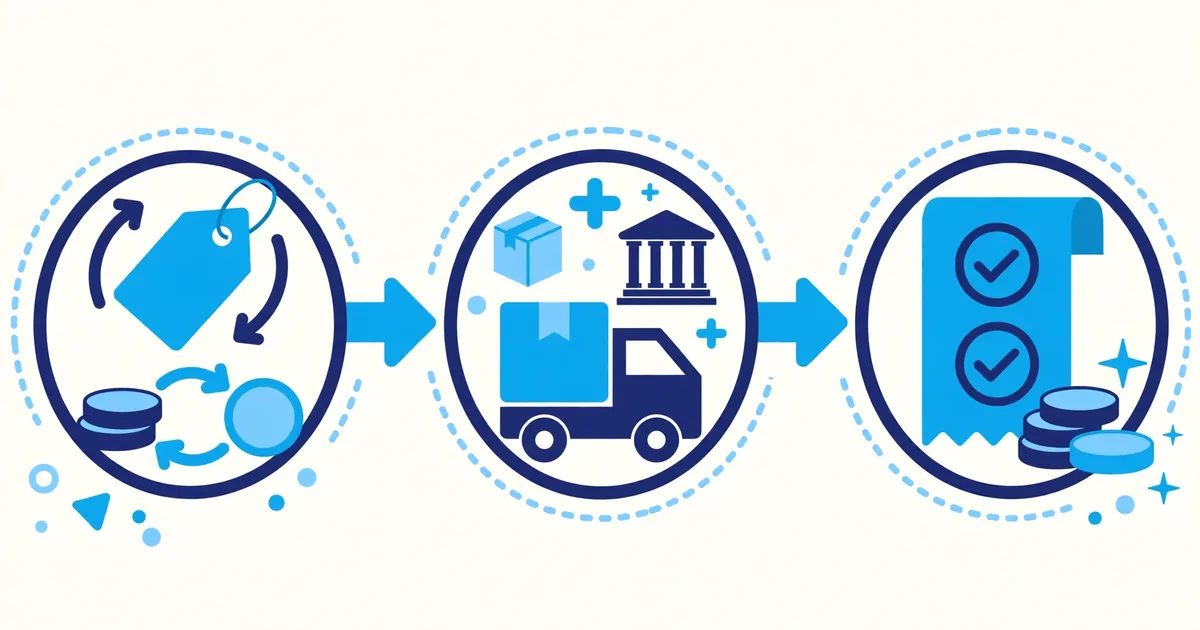
Show the full total before payment
- Currency shown from the product page through the receipt
- Shipping and estimated duties visible before card details
- A realistic range stated plainly when a charge cannot be fixed
Eliminating Foreign Transaction Surprises
A checkout can show a familiar currency while the customer’s card issuer still treats the purchase as an international transaction.
The resulting fee may appear later on the statement, which creates frustration even when the retailer didn’t impose it. Currency conversion can also happen twice if the checkout and issuer process the transaction differently.
Tell shoppers which currency will be charged and identify the country associated with the payment entity when appropriate. Avoid vague labels such as “local pricing” if the transaction may still be processed elsewhere.
Support teams should have a short explanation ready for questions about exchange rates and issuer fees.
Among the broader cart abandonment strategies, clear costs and localized checkout options stand out because they address uncertainty before it becomes a service complaint or a disputed charge.

Payment method matters as much as price
Price is only half the decision. In the same DHL 2026 survey, 62% of shoppers said they would abandon a purchase if their preferred payment method were unavailable.
Another 41% wanted to see prices in their local currency. Cards, wallets, and local payment methods all need a place in the checkout.
The gateway itself affects how a payment is processed and settled. A payment gateway comparison for ecommerce shows how providers differ on currencies, settlement, and fees.
Reducing Latency Across Edge Networks
A checkout that feels fast near a company’s main server may perform poorly for a customer thousands of miles away. Payment scripts, fraud checks, address services, and analytics tags can each add network requests.
On a mobile connection, those delays may leave a button unresponsive or cause a shopper to submit the form twice.
Measure checkout speed by region and device instead of relying on one headquarters-based test. Serve static assets through nearby edge locations, compress scripts, and remove third-party tags that don’t support conversion or security.
Payment buttons should show an immediate loading state while the transaction is processed. Set performance alerts for regional slowdowns and track payment completion time separately from general page speed.
A technically available checkout can still lose sales if every step takes several seconds longer abroad.

Test a real purchase from each market
The clearest test is a full purchase from each priority market using a real mobile device and a modest connection. Record the displayed total, processing time, and receipt details.
Any mismatch or unexplained delay represents a direct opportunity to preserve more high-value international orders.
Losing high-value shoppers at international checkout?