Austin has become one of the hardest cities in America to ignore if you are buying software development. The tech workforce here grew 29.1% between 2018 and 2023, the fastest of any US tech market according to CBRE, and the city now hosts major operations for Tesla, Oracle, Apple, and Dell.
Office rents still run well below San Francisco and New York, which keeps drawing both talent and the firms that employ them.
That growth created a crowded market. Search for a development partner, and you get directory listings that rank whoever pays, agency sites that all claim the same things, and review platforms where every firm has 4.9 stars.
This guide cuts through that: seven Austin software development companies, evaluated against the same five criteria, with honest notes on where each one fits and where it does not.
The 7 Companies at a Glance
- CodeSol Technologies – Best for custom CRM and workflow automation
- Praxent – Best for fintech and enterprise digital products
- Syberry – Best for large-scale custom software programs
- Gigster – Best for enterprise engineering at scale
- The BHW Group – Best for buyers burned by templated builds
- 3Advance – Best for AI-first product teams
- ScrumLaunch – Best for startups scaling teams fast
The order above is not a ranking. The right firm depends entirely on your project size, industry, and budget, which is why each profile below ends with an honest note about fit.
How We Evaluated These Companies
Every firm on this list was checked against five criteria. If a company failed one, it did not make the list.
- Austin presence: a real office or headquarters in the Austin metro, not just a serviced address. Local presence matters for workshops, discovery sessions, and timezone overlap.
- Custom software focus: the firm builds bespoke software rather than reselling licenses or configuring off-the-shelf platforms as its core business.
- Verifiable track record: client work that can be confirmed through portfolios, case studies, or third-party review platforms such as Clutch.
- Team depth: enough engineers to staff a real project without the founder writing all the code.
- Transparent positioning: the company states clearly what it does and who it serves, instead of claiming to do everything for everyone.
We did not accept payment for placement. Directory data below comes from Clutch and The Manifest, two independent B2B review platforms, unless noted otherwise.
Quick Comparison
| Company | Team size | Founded | Core strength | Best for |
|---|---|---|---|---|
| CodeSol Technologies | 15+ | 2022 Austin, TX | Custom CRM and workflow automation | SMBs needing automation, not just code |
| Praxent | 30+ | 2000 | Fintech and enterprise digital products | Regulated industries, complex backends |
| Syberry | 200+ | 2014 | Large-scale custom software | Mid-market and enterprise builds |
| Gigster | 250-999 | 2014 | AI-assembled engineering teams | Enterprise programs at scale |
| The BHW Group | 11-50 | Austin, TX | Custom-only web and mobile builds | Buyers burned by templates |
| 3Advance | 15+ | 2010 | AI-first product development | Startups and AI-powered apps |
| ScrumLaunch | 50-249 | 2015 | Product development and IT recruiting | Startups scaling teams fast |
1. CodeSol Technologies: Best for Custom CRM and Workflow Automation
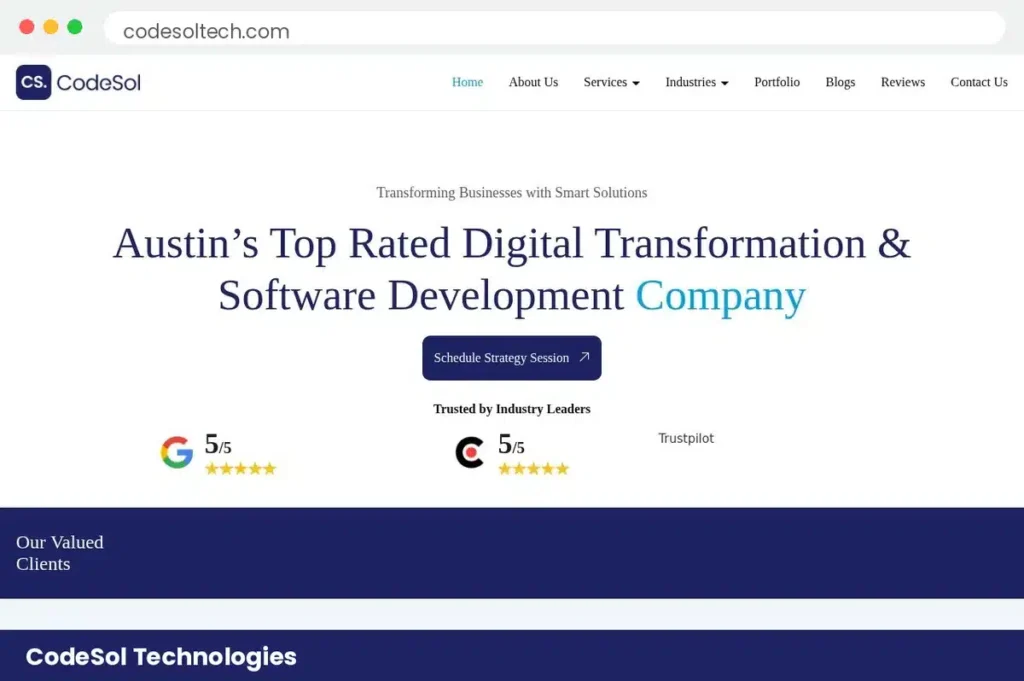
CodeSol Technologies is an Austin-based software development company at 5900 Balcones Drive, focused on custom CRM development, process and workflow automation, and business web platforms.
Key services
Custom CRM builds, workflow and process automation, reminder and notification systems, client portals, business website development, and cloud systems integration. The common thread is operational: every engagement is framed around removing manual work from the client’s day.
Strengths
The differentiation is automation-first thinking. Where most firms sell code, CodeSol’s engagements center on measurable operational change: CRM builds that keep client data in one place, automated reminders that cut no-shows, and integrations that connect a business’s tools so nothing is entered twice.
For service businesses, that framing maps directly to revenue, which is why the firm’s case work skews toward clinics, contractors, and professional firms rather than venture-backed startups.
Pricing is another practical advantage. Without the overhead of a 200-person payroll, project quotes land in ranges that small and mid-sized businesses can actually approve, and the firm offers ongoing maintenance and support so buyers are not stranded after launch.
Products
In 2026 CodeSol Technologies launched its top product for busy business owners serving the beauty and wellness space, like salons, spas, barbershops and 20+ more. The platform, called PandaCue, is eventually best for small to large businesses with unbeatable prices, features and support.
2. Praxent: Best for Fintech and Enterprise Digital Products
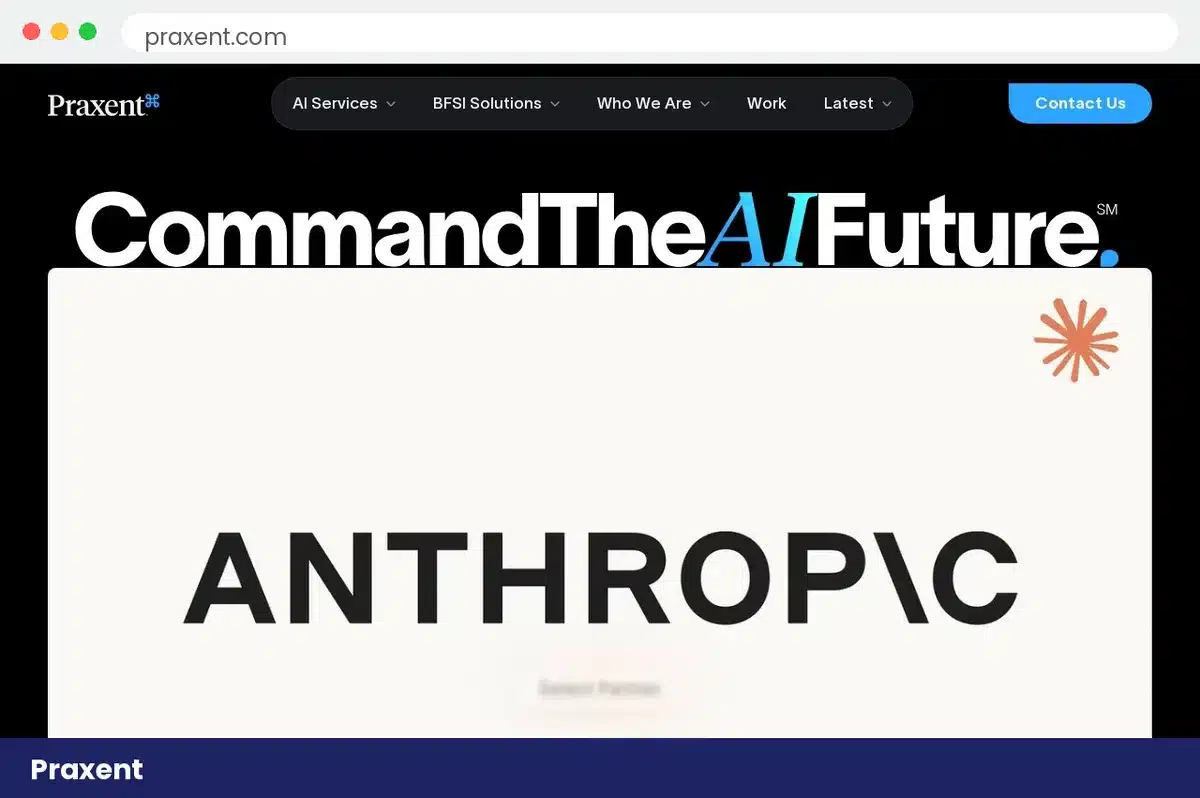
Praxent is one of Austin’s most established digital product studios. The Manifest lists the firm as founded in 2000 with a team of more than 30, and its client roster includes Dimensional Fund Advisors, Kasasa, and Sysco.
The current positioning leans heavily into AI services and BFSI (banking and financial services) solutions, and the firm carries a minimum project size of $25,000 on directory listings.
Key services
Custom software development, fintech applications, AI services, BFSI solutions, web and mobile development, and complex backend integrations.
Strengths
Depth in regulated industries is the standout. Fintech and financial services work demands audit trails, compliance awareness, and backend complexity that generalist shops struggle with, and Praxent has spent years in that world. Their process is transparent and agile delivery is consistent, which matters for buyers managing internal stakeholders.
Longevity counts too. A firm operating since 2000 has survived multiple technology cycles, which tells you something about process maturity and financial stability that a two-year-old shop cannot demonstrate.
Honest note
Praxent is priced for the enterprise and upper mid-market. Early-stage startups with tight budgets will likely find better fit elsewhere on this list.
3. Syberry: Best for Large-Scale Custom Software Programs
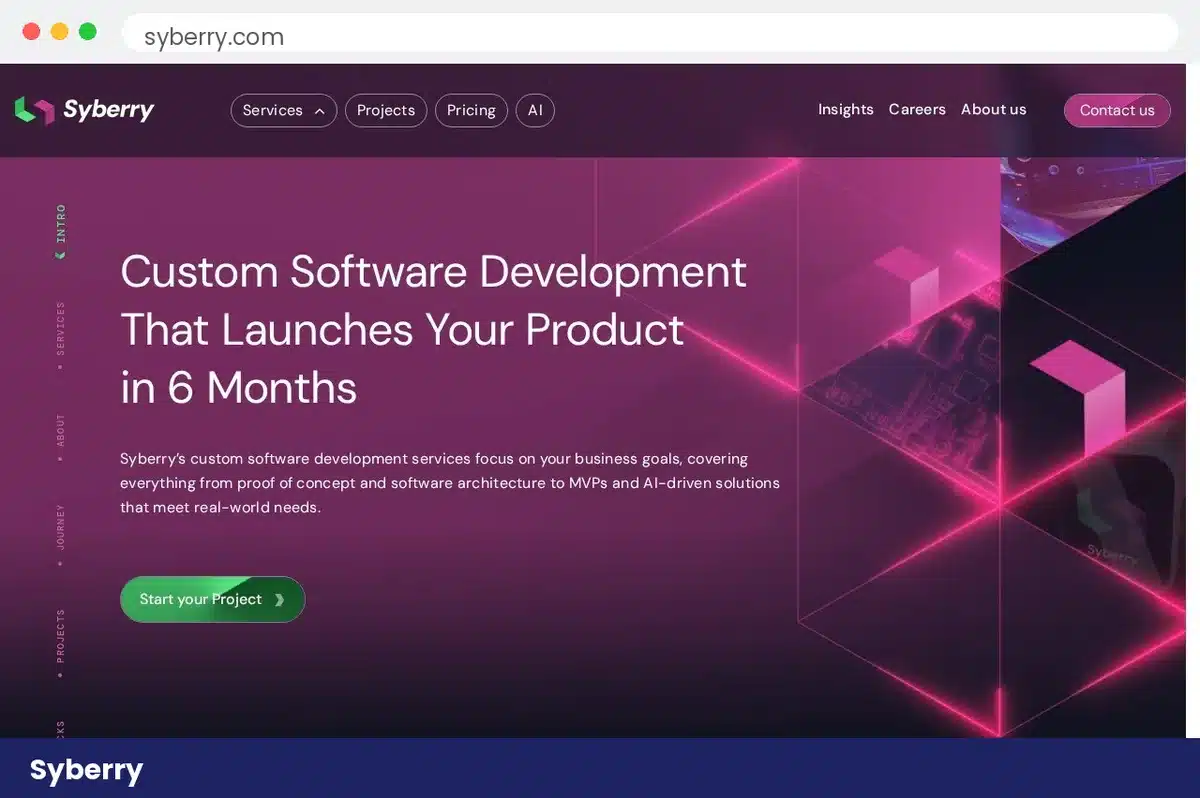
Syberry fields more than 200 developers from its Austin base and reports over 300 delivered digital products since its 2014 founding. Named clients include Shell, JLL, and PayPal, and the firm holds a 5-star rating on Clutch. Services span custom software development, enterprise modernization, and web and mobile builds across healthcare, fintech, energy, and education.
Key services
Custom software development, enterprise software modernization, web development, mobile app development, and dedicated engineering teams.
Strengths
Scale is the argument here. With 200-plus engineers, Syberry can staff large programs without the resource contention that stalls projects at smaller firms. Their headline promise of taking a product from concept to launch in six months signals a process built for speed at enterprise scale.
Industry breadth is the second argument. Few mid-size firms credibly cover healthcare, fintech, energy management, and education at the same time, which matters for buyers whose product touches more than one domain.
Honest note
Large vendors come with large-vendor process. Small projects can feel like a small fish in a big pond, and minimum engagement sizes reflect that.
4. Gigster: Best for Enterprise Engineering at Scale
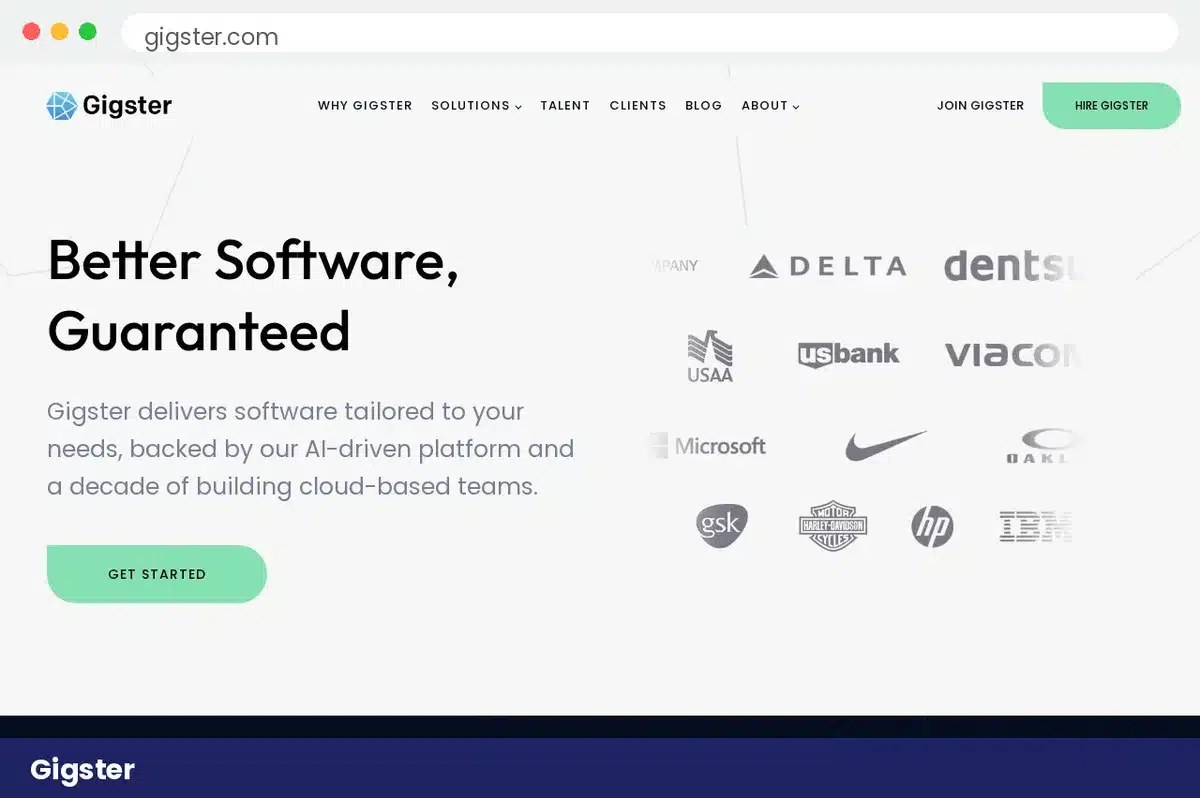
Gigster is headquartered in Austin and was founded in 2014. The Manifest places the team at 250 to 999 people with a minimum project size of $50,000, and the client list reads like a Fortune 500 index: Google, Microsoft, PepsiCo, and IBM. The model combines an AI-driven talent platform with managed engineering teams.
Key services
Custom software development, mobile app development, enterprise app modernization, artificial intelligence, and on-demand engineering teams.
Strengths
Few firms on this list can credibly serve the largest buyers, and Gigster is built for exactly that. The platform approach to assembling teams means they can scale engineers up or down faster than traditional consultancies, which suits enterprises with fluctuating program needs.
The client roster does real work in the evaluation. When Google, Microsoft, and IBM all appear, it signals procurement-grade process: security reviews, compliance, and delivery discipline that smaller buyers benefit from indirectly.
Honest note
The platform model is not the same as a dedicated boutique team. Buyers who want deep, long-term partnership with the same engineers should weigh that trade-off, and the $50,000 minimum rules out small projects entirely.
5. The BHW Group: Best for Buyers Burned by Templated Builds
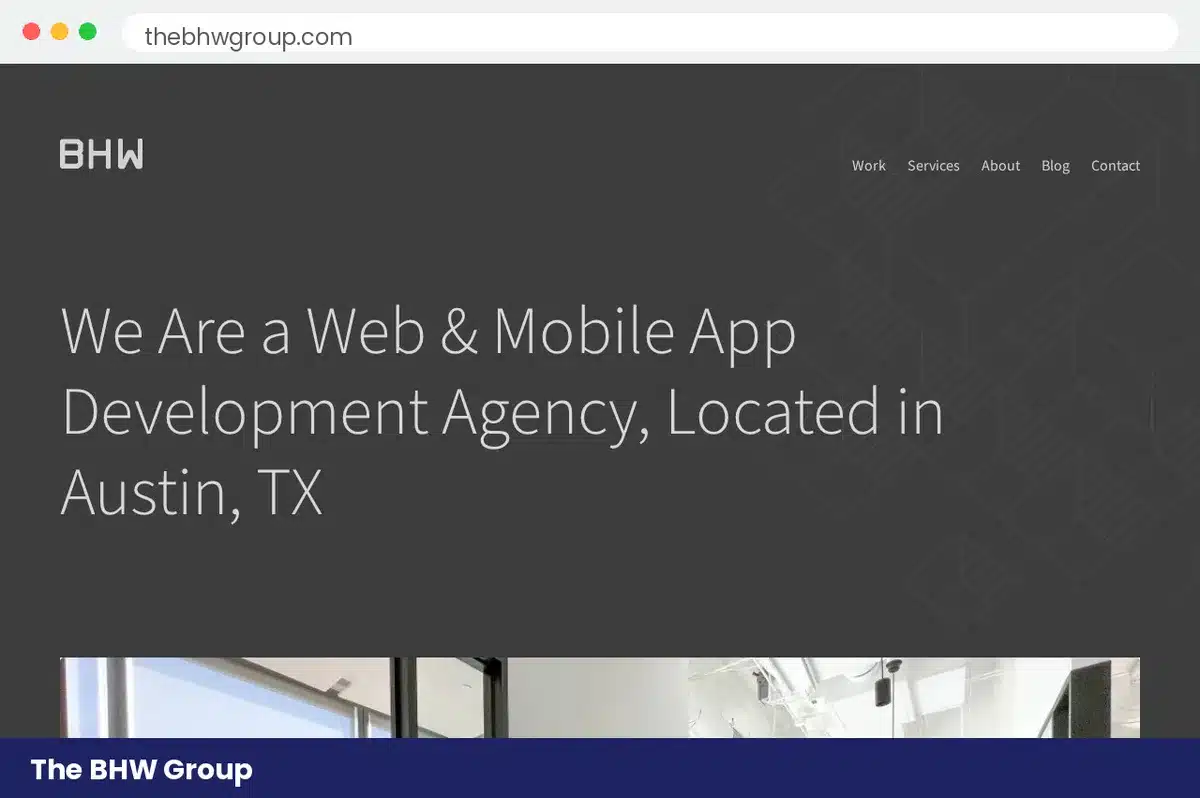
The BHW Group operates on an unusual principle, stated plainly on their site: they do not sell licenses, pre-built software, or reused solutions. Every engagement is built from the ground up.
The Austin firm reports more than 400 web and mobile applications across 23 industries, was a South by Southwest Interactive Innovation Award finalist in 2015, and was named an Austin Business Journal Best Place to Work four years running.
Key services
Custom web development, native iOS and Android development, UX design, and full-stack engineering, all built from scratch per engagement.
Strengths
The custom-only philosophy is a genuine differentiator for buyers who have been burned by agencies quietly recycling the same codebase. Four hundred shipped apps across 23 industries is a track record few boutiques can match, and the SXSW recognition plus four consecutive Best Place to Work awards suggest a stable, senior team rather than a revolving door of contractors.
The partnership framing matters too. Their site emphasizes working directly with clients over transactional vendor relationships, which tends to produce better discovery and fewer misunderstood requirements.
Honest note
Custom-only means you pay for everything from scratch. If your needs could be met with 80 percent off-the-shelf tooling, this is not the most economical path.
6. 3Advance: Best for AI-First Product Teams
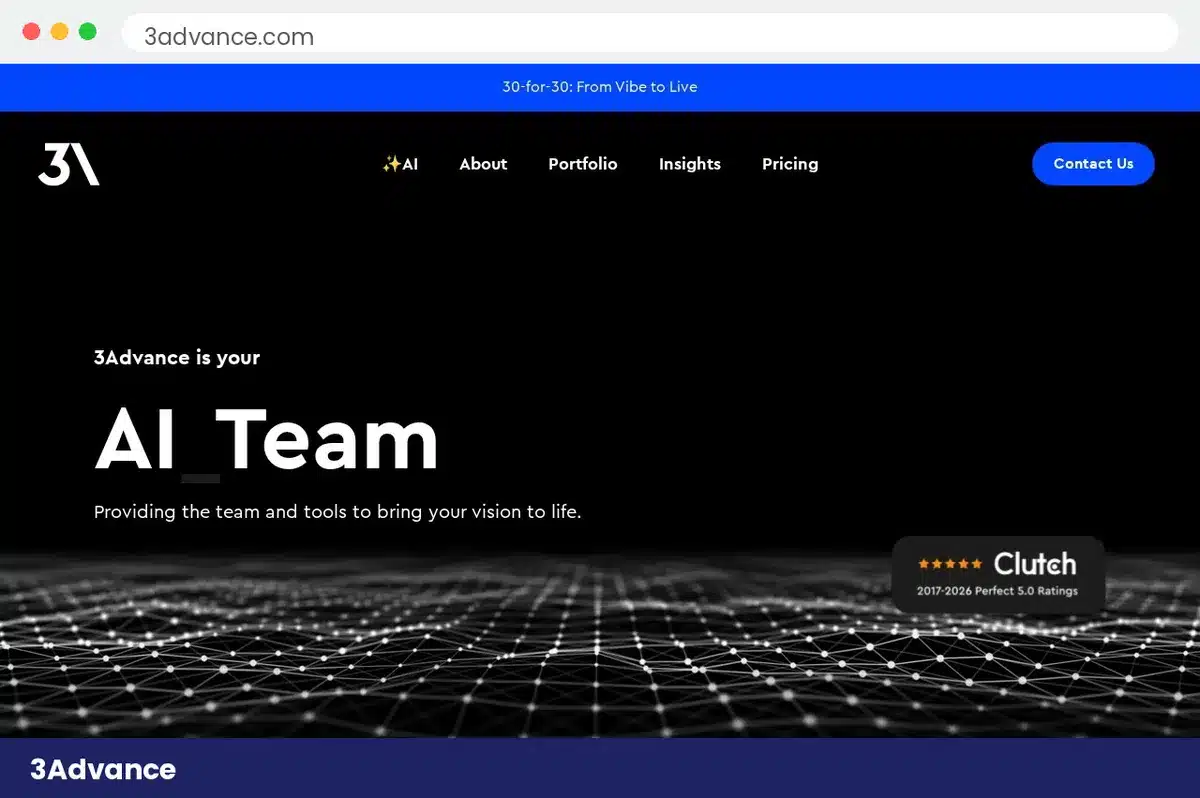
3Advance positions itself as an AI team for hire, building applications since 2010 according to its own site. The Austin firm carries a Clutch badge showing perfect 5.0 ratings from 2017 through 2026, and its navigation leads with AI services alongside portfolio and transparent pricing pages.
The team runs about 15-plus people focused on startups and growth-stage companies.
Key services
AI-powered software development, custom product development, mobile and web applications, UI/UX design, generative AI integration, and cloud infrastructure.
Strengths
The AI-native positioning is more than marketing. Their process bakes generative AI and large language models into the build itself, which suits buyers who want AI features as the product rather than a bolt-on. Transparent pricing pages are rare in this industry and worth credit; most firms hide pricing until the third sales call.
The Clutch record is unusually consistent. Perfect 5.0 ratings sustained from 2017 through 2026 across multiple years of reviews is a signal of delivery discipline, not a lucky quarter.
Honest note
A 15-person team means limited parallel capacity. Large multi-workstream programs will strain a shop this size, so confirm staffing before signing.
7. ScrumLaunch: Best for Startups Scaling Teams Fast
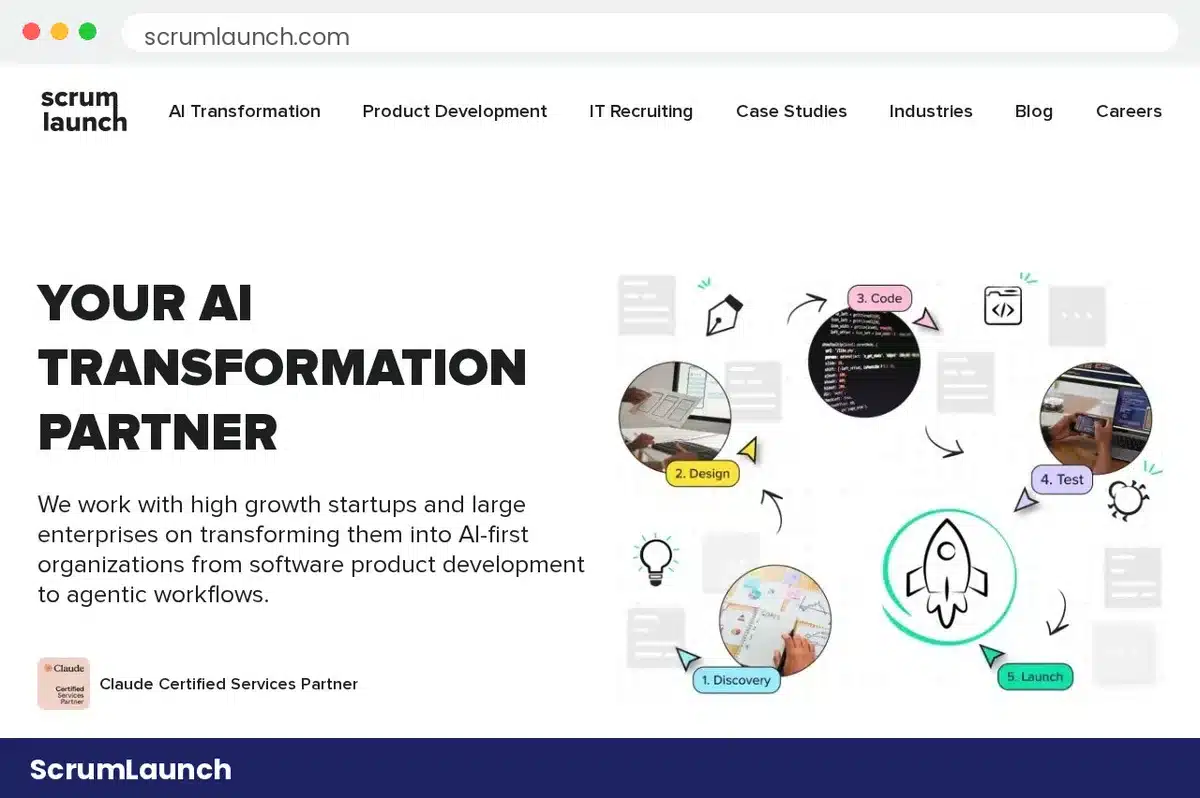
ScrumLaunch is headquartered in Austin with a second office in Vancouver, Washington, and was founded in 2015. The Manifest lists 50 to 249 people. The firm blends product development with IT recruiting and now leads with AI transformation services, working with high-growth startups and large enterprises.
Key services
AI transformation, software product development, IT recruiting and staff augmentation, UX/UI design, and web development.
Strengths
The combination of building software and recruiting engineers is practical for startups that need to ship now and hire later. Few firms straddle both sides, and it gives buyers a path from outsourced development to an in-house team without switching vendors mid-flight.
The AI transformation framing is timely. Their positioning around turning companies into AI-first organizations, from product development to agentic workflows, matches where buyer demand is actually heading in 2026.
Honest note
The dual model can blur focus. Buyers should clarify in the contract whether they are getting a product team, recruiting help, or both, and how success is measured for each.
How to Choose the Right Firm
Match the firm to your constraints, not to a ranking. Four questions cut through the noise:
What is your real budget band?
Austin-based teams typically run $100 to $150 per hour and up, while hybrid and offshore models run lower. Minimum project sizes on this list range from $25,000 to $50,000 at the firms that publish them. Get a fixed quote scoped to your requirements before comparing hourly rates, because scope differences dwarf rate differences.
Has the firm shipped in your industry?
Ask for two references in your vertical. A fintech backend and a restaurant booking app share almost nothing except the word software. Industry experience shows up in the questions a firm asks during discovery: if they are not asking sharp questions, they have not done your kind of work.
Who owns the code and the process?
Confirm code ownership, documentation standards, and what happens if you part ways. Firms with transparent processes will answer this before you ask. Get the answer in the contract, not in a sales call.
What happens after launch?
Post-launch support separates vendors from partners. Ask about maintenance and support plans, response times, and how feature requests are priced. Software is never finished; the launch is the midpoint, not the end.
Red Flags When Evaluating Firms
Not every firm that looks polished is a safe choice. Watch for these warning signs during evaluation:
No third-party reviews
A firm with only testimonials on its own website and nothing on Clutch, Google, or a similar platform is asking you to take its word for everything. Legitimate firms accumulate independent reviews over time.
Vague about who does the work
Some agencies sell with senior architects and deliver with junior subcontractors. Ask specifically who will be on your project week to week, and get it in writing.
No questions during discovery
A firm that quotes a price after one call has not understood your problem. Serious discovery takes multiple conversations and ends with the firm teaching you something about your own requirements.
Unwilling to discuss failure
Every experienced firm has a project that went sideways. How they talk about it tells you more than any case study. Evasion here is a signal to walk away.
FAQs
How much does custom software development cost in Austin?
Most Austin firms quote $100 to $150 per hour or higher for senior onshore teams. Small business projects often land between $25,000 and $75,000, while enterprise platforms start above $100,000. Always get a fixed-scope quote rather than comparing hourly rates alone.
Should I hire a local Austin firm or go remote?
Local firms offer in-person discovery workshops and timezone alignment, which pays off on complex projects. For well-defined builds, remote and hybrid teams can cut costs significantly. Many Austin companies now blend both.
How long does a typical custom software project take?
An MVP usually takes 3 to 6 months. Full platforms with integrations run 6 to 12 months or more. Firms promising dramatically faster timelines without cutting scope deserve skepticism.
What should I check before signing with a development company?
Verified client reviews on Clutch or a similar third-party platform, a portfolio with work in your industry, clear code ownership terms, and a written post-launch support plan. Vagueness on any of these is a red flag.
Do Austin software companies work with clients outside Texas?
Yes. Most firms on this list serve clients nationally, and several work internationally. Austin is the operating base, not the boundary. Remote collaboration is standard practice across the industry now.
What is the difference between custom software and off-the-shelf platforms?
Custom software is built for your exact workflows, while off-the-shelf platforms force your workflows into their template. Custom costs more upfront but removes licensing fees and workarounds; off-the-shelf is faster to start but expensive to bend. Most growing businesses outgrow templates within a few years.
Budgeting a build? Our breakdown of website development costs in Austin shows what drives the price up or down.
Need a development partner that starts with your workflow, not just code?