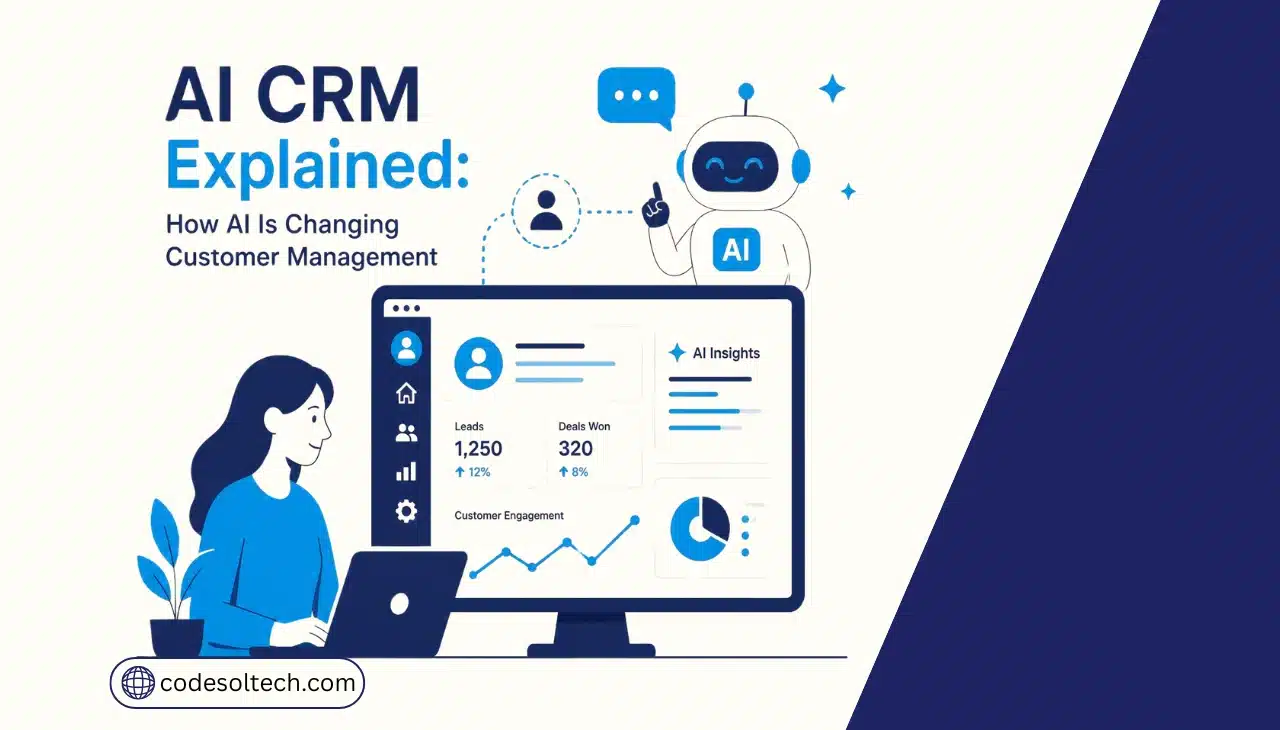
AI-powered CRM is customer relationship management software that uses machine learning, natural language processing, and generative AI to automate data entry, score leads, predict churn, and generate customer communications.
It replaces manual record-keeping with predictive scoring and autonomous workflows, and 87% of sales organizations already use it in some form.
Traditional CRM stores customer data. AI-powered CRM interprets that data and acts on it. Salesforce Einstein, HubSpot Breeze, and Microsoft Dynamics 365 Copilot represent three commercial examples of this category.
How Does AI Actually Work Inside a CRM System?
AI-powered CRM platforms run on four core technical components working together.
- Machine learning models — trained on historical deal, ticket, and engagement data to predict outcomes such as lead conversion probability or churn risk.
- Natural language processing (NLP) — parses emails, call transcripts, and support tickets to extract intent, sentiment, and next-step actions.
- Generative AI agents — draft emails, summarize call notes, and generate proposal content based on CRM record context.
- Predictive analytics engines — calculate forecasts and prioritization scores from pipeline and behavioral data in real time.
These four components require one shared input to function correctly: unified, clean customer data. A CRM with fragmented or duplicate records produces inaccurate AI outputs regardless of model quality.
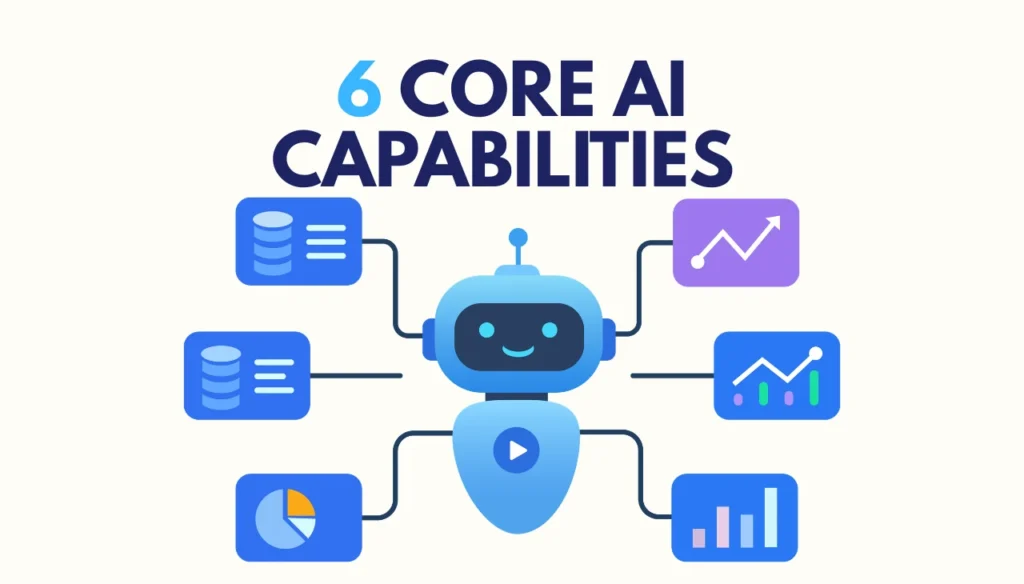
6 Core AI Capabilities in Modern CRM Platforms
Modern AI-powered CRM software executes six primary capability categories.
- Predictive lead scoring — ranks leads by conversion probability using historical win/loss patterns.
- Sentiment analysis — scans support tickets and call transcripts to detect customer frustration before churn occurs.
- Conversational AI agents — handle first-line customer queries through chat and voice without human routing.
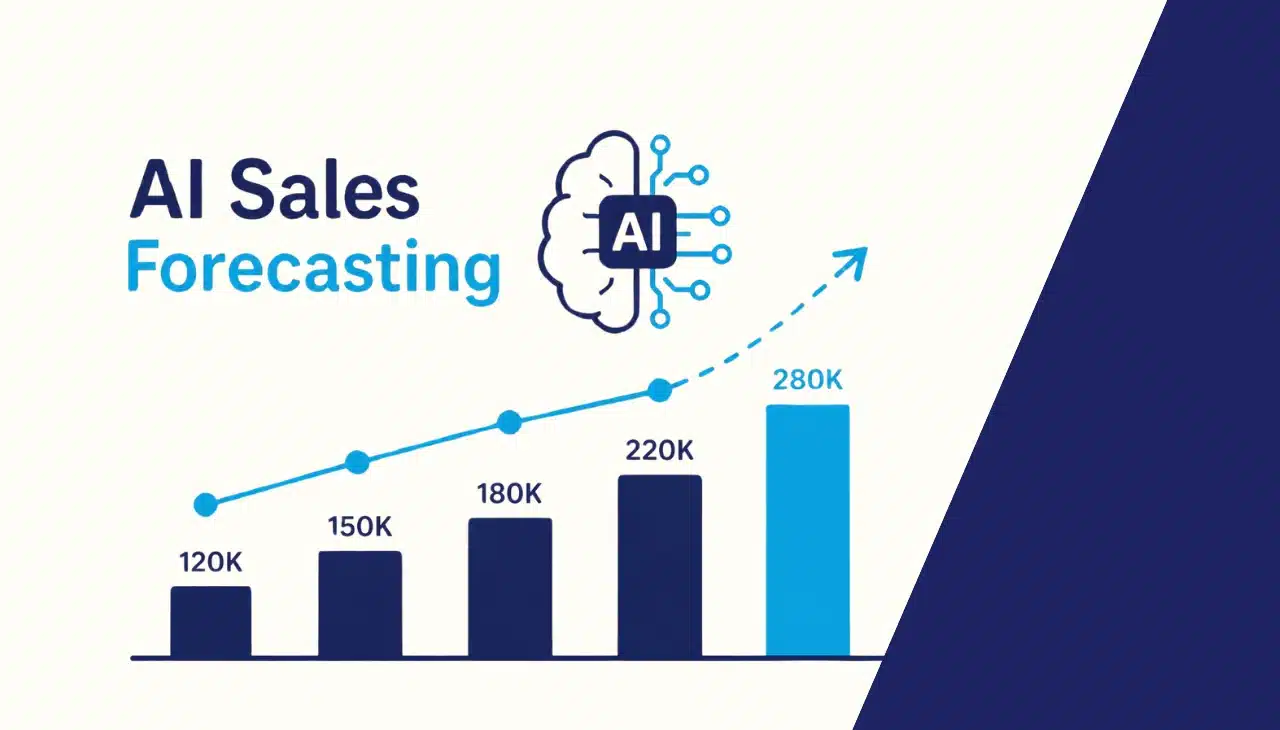
- Sales forecasting — projects revenue using pipeline velocity, deal stage, and rep-level conversion history.
- Workflow automation — triggers follow-up tasks, approvals, and record updates based on defined business rules.
- Generative content drafting — produces first-draft emails, proposals, and meeting summaries from CRM record context.
Sales organizations report measurable value from these capabilities: 89% of sellers using AI say it deepens customer understanding, and once fully implemented, AI agents are expected to cut prospect research time by 34% and email drafting time by 36%.
AI-Powered CRM vs. Traditional CRM
| Function | Traditional CRM | AI-Powered CRM |
|---|---|---|
| Lead prioritization | Manual, rep-assigned scoring | Automated predictive scoring |
| Data entry | Manual field updates by reps | Auto-logged from email, calls, meetings |
| Customer communication | Rep-drafted, template-based | Generative AI drafts, rep approves |
| Churn detection | Reactive, based on cancellation events | Predictive, based on sentiment and engagement decline |
| Forecasting | Rep-estimated pipeline totals | Model-generated probability forecasts |
What Business Impact Does AI-Powered CRM Deliver?
AI-powered CRM adoption has moved from experimental to standard practice. 87% of sales organizations currently use some form of AI for prospecting, forecasting, lead scoring, or email drafting, and 87% of sellers using it report reduced day-to-day stress.
The productivity impact extends beyond individual sellers to the entire function. McKinsey estimates generative AI could add $0.8 trillion to $1.2 trillion in incremental productivity across sales and marketing on top of gains already realized from traditional analytics and automation.
At a broader economic level, McKinsey identifies customer operations and sales and marketing as two of the four functional areas capturing roughly 75% of the total value generative AI use cases can deliver across a company.
Why Do Over 40% of AI CRM Projects Fail?
Gartner predicts more than 40% of agentic AI projects will be canceled by the end of 2027 due to escalating costs, unclear business value, or inadequate risk controls. This failure rate traces to three recurring implementation mistakes, not to weak AI models.
- Fragmented data — AI models trained on duplicate or siloed CRM records generate inaccurate predictions and unreliable outputs.
- Undefined success metrics — teams deploy AI agents without a measurable target, making ROI impossible to verify.
- Agent washing — vendors rebrand existing chatbots and rule-based automation as “agentic AI” without genuine autonomous reasoning, producing tools that cannot scale past a pilot.
Businesses that consolidate customer data into a single CRM instance before layering on AI avoid the most common cause of project cancellation. This is why data migration and CRM architecture planning precede AI deployment, not follow it.
How to Implement AI-Powered CRM Successfully
A successful AI-powered CRM rollout follows a defined sequence rather than a single software purchase.

- Audit data quality first — deduplicate and standardize customer records before connecting any AI model.
- Define one measurable use case — start with lead scoring or ticket triage, not a full-platform overhaul.
- Configure workflow automation rules — set explicit triggers for what the AI agent executes versus what it escalates to a human.
- Integrate with existing systems — connect the CRM to email, calendar, and support platforms through native or custom workflow automation integrations.
- Measure against a baseline — track conversion rate, response time, and forecast accuracy before and after deployment.
Businesses running custom or legacy systems often require a tailored integration layer rather than an off-the-shelf plug-in.
CodeSol Technologies builds this layer through custom software development and CRM development services designed around each company’s existing data structure.
FAQs
Does AI-powered CRM replace sales representatives?
No. AI-powered CRM automates data entry, scoring, and first-draft communication. Sales representatives retain responsibility for negotiation, relationship-building, and final decision approval. AI reduces administrative task time; it does not replace the role.
How much does AI-powered CRM cost to implement?
Cost depends on the base CRM platform, the number of AI-enabled seats, and the level of custom integration required. Off-the-shelf AI add-ons from platforms like Salesforce or HubSpot carry a per-seat monthly fee. Custom AI-CRM integration for legacy systems requires a separate development budget scoped to the specific data architecture.
What data does an AI-powered CRM need to function accurately?
AI-powered CRM requires unified, deduplicated customer records spanning contact history, deal stage, communication logs, and support tickets. Fragmented data across disconnected tools is the leading cause of inaccurate AI predictions.
Can small businesses use AI-powered CRM?
Yes. Most major CRM platforms now include AI features at standard subscription tiers, and 75% of small businesses have already invested in AI tools.
Final Words
AI-powered CRM turns customer data into predictive action instead of static records. It scores leads, drafts communication, and flags churn risk automatically.
The technology delivers measurable gains only when built on clean, unified data; without that foundation, even the best AI model produces unreliable output.
Ready to Build an AI-Powered CRM That Fits Your Business?
CodeSol Technologies designs and integrates custom AI-CRM systems built around your existing data and workflows.
![Conversational AI in CRM: Stop Typing, Start Talking [2026]](https://www.codesoltech.com/wp-content/uploads/2026/10/Conversational-AI-in-CRM-Stop-Typing-Start-Talking-2026.webp)