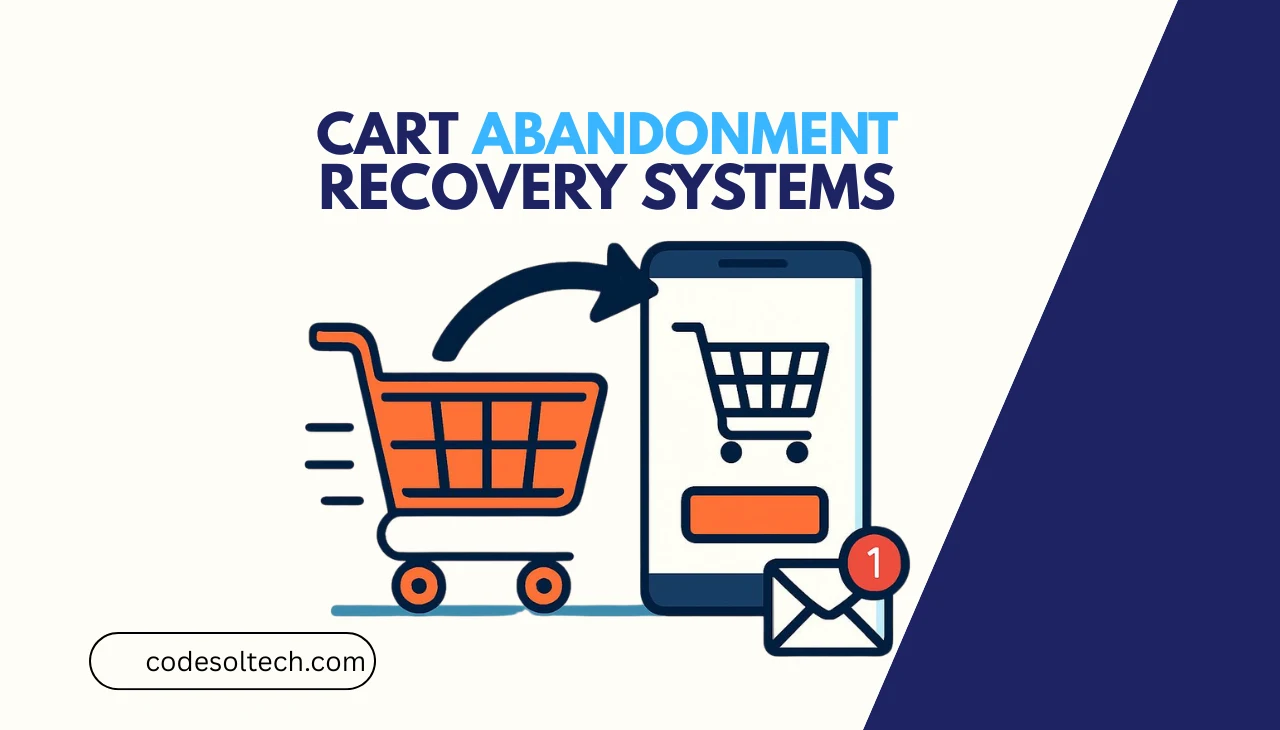
Cart Abandonment Recovery Systems are automated conversion frameworks that re-engage users who leave checkout without completing a transaction. These systems combine session tracking, Retargeting, and Email Automation to recover lost revenue and increase checkout completion rates.
Over 70% of ecommerce carts are abandoned, making recovery systems a core revenue optimization layer in modern ecommerce architecture.
What Is a Cart Abandonment Recovery System?
A Cart Abandonment Recovery System is a behavioral-triggered marketing engine that captures user data during checkout sessions and executes automated re-engagement workflows after abandonment.
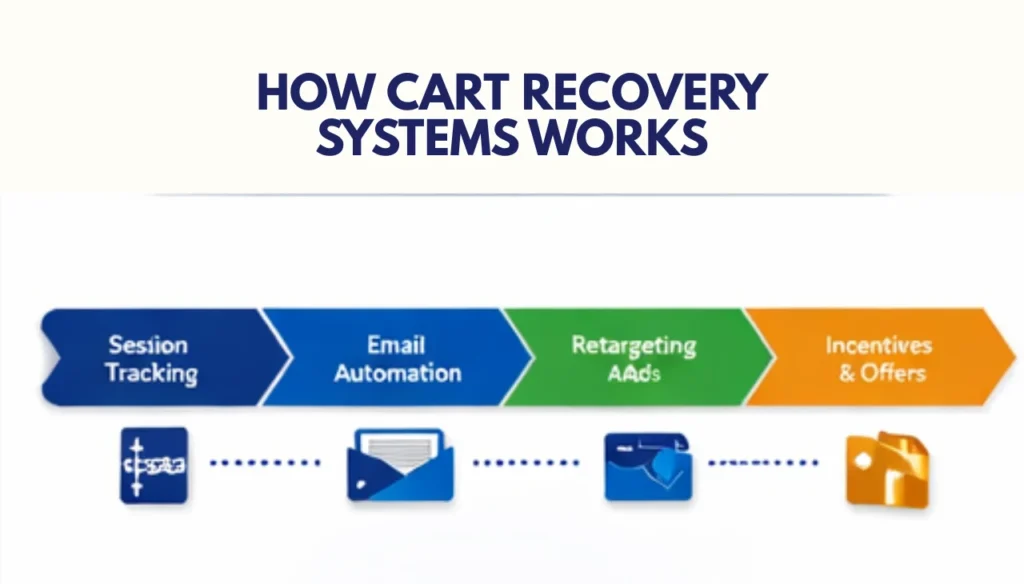
- Session Tracking: Identifies user actions, drop-off points, and checkout inactivity.
- Email Automation: Sends timed recovery sequences triggered by behavioral events.
- Retargeting Systems: Re-engage users via ads across platforms like Meta and Google.
- Incentive Engines: Apply discounts, urgency triggers, or trials to convert intent.
Platforms like BigCommerce define abandonment as inactivity after checkout initiation, typically within a 60-minute window. :contentReference[oaicite:1]{index=1}
How Cart Recovery Systems Work (Step-by-Step Execution)
1. Session Capture and Behavioral Tracking
The system initiates tracking when a user enters the checkout flow. It logs session data, including product selection, time-on-page, and form interaction.
- Captures email input instantly during checkout
- Tracks session inactivity thresholds (e.g., 60 minutes)
- Stores cart data for recovery workflows
Advanced systems provide session-level insights, enabling funnel diagnostics and drop-off analysis. :contentReference[oaicite:2]{index=2}
2. Trigger-Based Email Automation
Email automation executes a predefined sequence after abandonment. This system operates on time-based triggers aligned with purchase intent decay.
- 1st Email: Sent within 60 minutes (high intent reminder)
- 2nd Email: Sent after 24 hours (reassurance + alternatives)
- 3rd Email: Sent after 72 hours (discount or urgency)
Cart recovery emails achieve ~40% open rates, significantly outperforming standard campaigns. :contentReference[oaicite:3]{index=3}
3. Retargeting and Multi-Channel Re-engagement
Retargeting systems activate when session data syncs with advertising platforms. These systems deliver personalized ads featuring abandoned products.
- Dynamic product ads across social platforms
- Cross-device tracking for session continuity
- Frequency capping to prevent ad fatigue
Retargeting reinforces brand recall and restores purchase intent after session drop-off.
4. Incentive Optimization Engine
The system introduces conversion triggers based on user behavior and timing.
- Limited-time discount codes
- Free trial offers or extended guarantees
- Exit-intent popups with urgency timers
Freemius reports up to 7.5% revenue recovery using automated incentive-based email flows. :contentReference[oaicite:4]{index=4}
Why Cart Abandonment Happens (Root Cause Layer)
Cart abandonment occurs when friction interrupts high-intent checkout sessions. Every abandonment event represents a breakdown in user experience, pricing transparency, or trust signaling. Cart recovery systems operate effectively only when these root causes are diagnosed and reduced at the source.
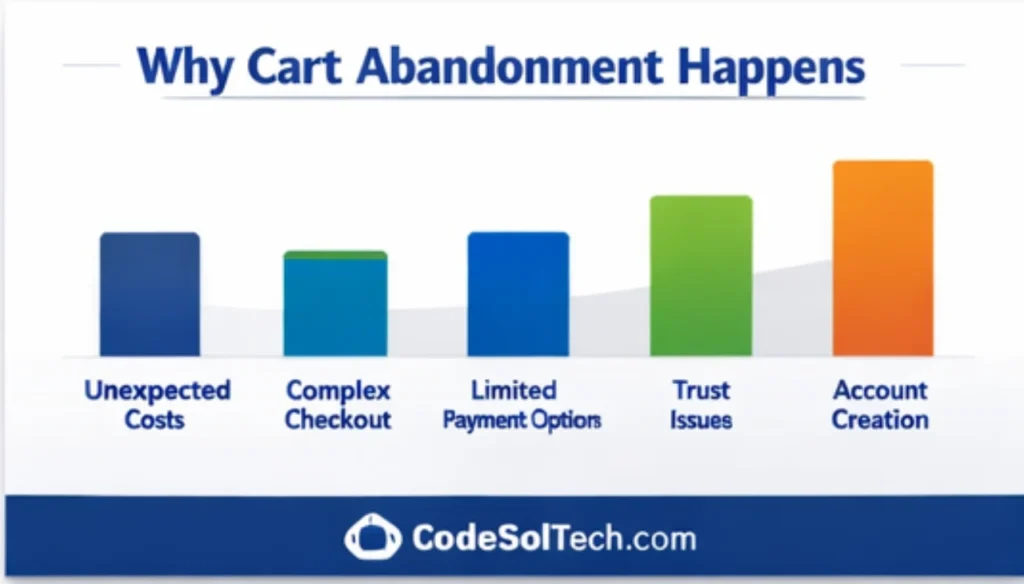
Unexpected Costs (Shipping, Taxes, Fees)
Unexpected cost disclosure at the final checkout stage triggers immediate drop-offs. Users enter checkout with a perceived total price, and any deviation increases cognitive friction and purchase resistance.
- Shipping fees increase total cost by 10%–30% on average
- Tax calculations appear late in poorly configured systems
- Hidden fees reduce price trust and transparency
Displaying full pricing early in the funnel stabilizes user expectations and preserves conversion intent.
Complex Checkout Processes
A checkout flow with excessive steps increases abandonment probability. Each additional form field or page introduces friction and extends completion time.
- Optimal checkout length: 3–4 steps maximum
- Form fields exceeding 12 inputs reduce completion rates
- Multi-page checkouts without progress indicators decrease trust
Simplified checkout architecture improves task completion efficiency and reduces cognitive load.
Limited Payment Options
Payment friction occurs when preferred payment methods are unavailable. Users abandon carts when they cannot complete transactions using familiar or trusted gateways.
- Global users require multiple payment methods (cards, wallets, BNPL)
- Mobile users prefer one-click payment systems
- Regional payment limitations reduce accessibility
Expanding payment integrations increases transactional flexibility and completion rates.
Trust Issues (Security, Returns, Credibility)
Trust signals directly influence purchase decisions at the checkout stage. Users evaluate risk before entering sensitive data.
- Missing SSL indicators reduce perceived security
- Unclear return policies increase purchase hesitation
- Lack of reviews or testimonials weakens credibility
Trust-building elements such as guarantees, badges, and transparent policies strengthen conversion confidence.
Mandatory Account Creation
Forced account registration interrupts purchase momentum. Users prefer fast, frictionless transactions without commitment barriers.
- Guest checkout increases conversion rates by 20%–35%
- Password creation introduces unnecessary friction
- Email-only checkout reduces abandonment significantly
Allowing guest checkout preserves user flow and accelerates transaction completion.
Direct Impact on Conversion Rates
Each friction point compounds abandonment probability within the checkout funnel. These factors directly reduce conversion rates by disrupting user intent at the highest-value stage of the session.
- High friction = low checkout completion rate
- Low trust = increased hesitation and exits
- Poor UX = reduced session-to-transaction ratio
Effective cart abandonment recovery begins with eliminating these root causes, not only re-engaging lost users.at high-intent stages of the funnel. :contentReference[oaicite:5]{index=5}
What Makes a High-Performance Recovery System?
A high-performing system integrates data, automation, and personalization across the entire funnel.
- Real-Time Session Intelligence: Tracks behavior before abandonment
- Multi-Touch Automation: Combines email, SMS, and retargeting
- Dynamic Personalization: Adapts messaging based on cart value and intent
- Funnel Feedback Loop: Uses analytics to improve checkout UX
Recovery systems act as both a revenue recovery tool and a diagnostic system for conversion optimization.
How to Implement Cart Recovery Systems (Practical Framework)
Cart Abandonment Recovery Systems require structured deployment across marketing automation, analytics infrastructure, and conversion optimization layers. The system executes through synchronized data collection, behavioral triggers, and multi-channel re-engagement workflows.
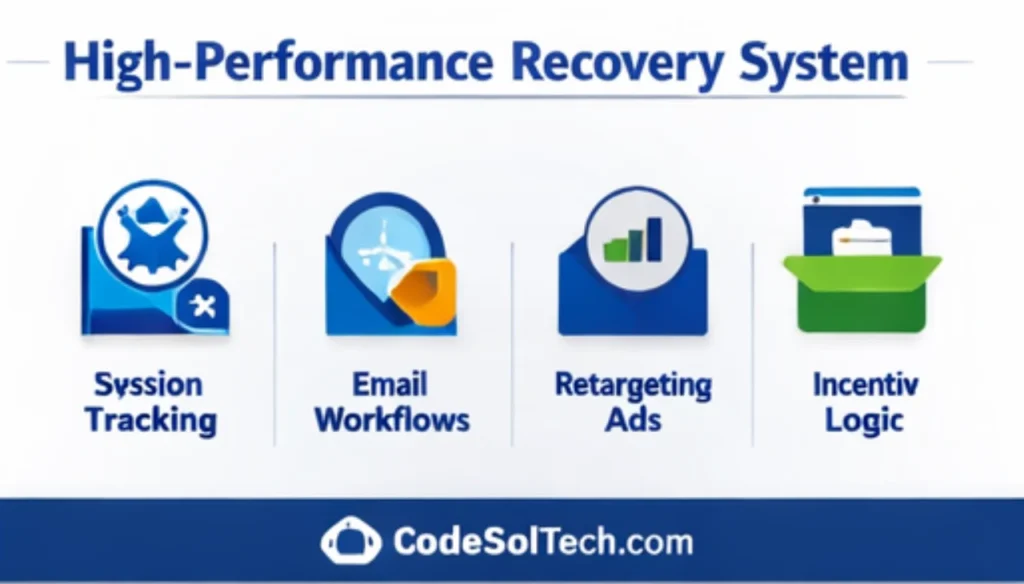
1. Integrate Session Tracking Tools
Session tracking captures user behavior across the checkout funnel and identifies abandonment points. This layer provides the foundational dataset for all recovery workflows.
- Deploy analytics platforms (Google Analytics 4, server-side tracking)
- Implement heatmaps and session recordings (e.g., Hotjar, Microsoft Clarity)
- Track key events: add-to-cart, checkout start, form interaction, exit points
- Define abandonment threshold (typically 30–60 minutes of inactivity)
Accurate session tracking enables precise segmentation and trigger-based automation.
2. Configure Email Automation Workflows
Email automation executes recovery sequences based on real-time behavioral triggers. The system activates immediately after session abandonment.
- Capture user email early in checkout (first or second step)
- Build a 3-stage sequence:
- 1st email (within 60 minutes): cart reminder with product details
- 2nd email (after 24 hours): trust signals and FAQs
- 3rd email (after 48–72 hours): incentive or urgency trigger
- Use dynamic content (product images, pricing, cart summary)
- Implement behavioral segmentation (high-value carts vs low-value carts)
Email automation systems like Klaviyo or Mailchimp execute these workflows with event-based triggers and API integrations.
3. Deploy Retargeting Pixels
Retargeting pixels track users across platforms and enable ad-based re-engagement after abandonment. This layer extends recovery beyond email.
- Install Meta Pixel for Facebook and Instagram retargeting
- Deploy the Google Ads remarketing tag for display and YouTube campaigns
- Enable dynamic product ads linked to product catalogs
- Configure audience segments based on checkout behavior
Retargeting restores purchase intent through repeated exposure and personalized product ads.
4. Design Incentive Logic Based on Cart Value
Incentive logic introduces conversion triggers based on cart value, user intent, and timing. This system prevents unnecessary margin loss while maximizing recovery.
- Apply tiered discounts:
- Low-value carts: no discount, reminder only
- Mid-value carts: 5%–10% discount
- High-value carts: 10%–20% discount or bonus offer
- Trigger incentives only in the final email or the delayed stage
- Use urgency elements (countdown timers, limited stock messaging)
- Test free shipping vs percentage discount effectiveness
Structured incentive logic protects profitability while increasing recovery rates.
5. Continuously A/B Test and Optimize
A/B testing refines recovery system performance through controlled experimentation. This layer ensures continuous improvement in conversion metrics.
- Test email subject lines (curiosity vs urgency)
- Compare send timing (30 min vs 60 min vs 2 hours)
- Evaluate CTA variations (Return to Cart vs Complete Order)
- Analyze incentive performance (discount vs free shipping)
- Measure metrics: open rate, click-through rate, recovery rate
Data-driven optimization increases recovery efficiency and long-term revenue impact.
System Integration Outcome
A fully deployed cart recovery system creates a feedback loop between user behavior, automation triggers, and conversion outcomes. This system transforms abandoned sessions into measurable revenue while improving overall funnel performance.
For implementation support, explore eCommerce SEO & CRO services to align traffic acquisition with conversion recovery.
Advanced Strategy: Pre-Abandonment Optimization
Recovery systems perform best when combined with pre-abandonment optimization.
- Add trust signals (reviews, guarantees, SSL badges)
- Simplify checkout to 3–4 steps maximum
- Display total cost upfront
- Enable guest checkout
- Use real-time chat support
This approach reduces dependency on recovery systems and increases baseline conversion rates.
Final Words
Cart abandonment recovery systems transform lost sessions into measurable revenue through automation, retargeting, and behavioral data. The system performs best when integrated with checkout optimization and user experience improvements.
Businesses that align session tracking, email automation, and retargeting create a compounding effect on conversion rates and customer lifetime value.
Want to recover 20–30% of lost revenue? Visit CodeSol Technologies and deploy a conversion-focused recovery system tailored to your store.