

Downtown businesses face 10 critical website challenges: slow loading speeds, poor mobile responsiveness, outdated designs, weak SEO performance, limited local visibility, security vulnerabilities, and confusing navigation. These issues cost companies and customers daily.
However, implementing strategic fixes like mobile optimization, speed improvements, local SEO tactics, and modern design updates can transform struggling websites into powerful revenue generators that consistently attract and convert local customers.
Understanding the Impact of Website Challenges
Website challenges affect businesses in multiple ways. First, they frustrate potential customers who might abandon the site entirely. Additionally, search engines like Google penalize websites with poor performance, making it harder for local customers to find the business online.
Furthermore, competitors with better websites gain an unfair advantage. Therefore, recognizing and fixing these challenges becomes essential for survival in the competitive downtown marketplace.
10 Website Challenges Faced by Businesses Around Downtown Austin (And How to Fix Them)
- Slow Loading Speeds
- Poor Mobile Responsiveness
- Outdated Design and Content
- Weak SEO Performance
- Limited Local Search Visibility
- Security Vulnerabilities
- Confusing Navigation and User Experience
- Lack of Clear Contact Information
- Missing or Poor Quality Content
- No Clear Value Proposition
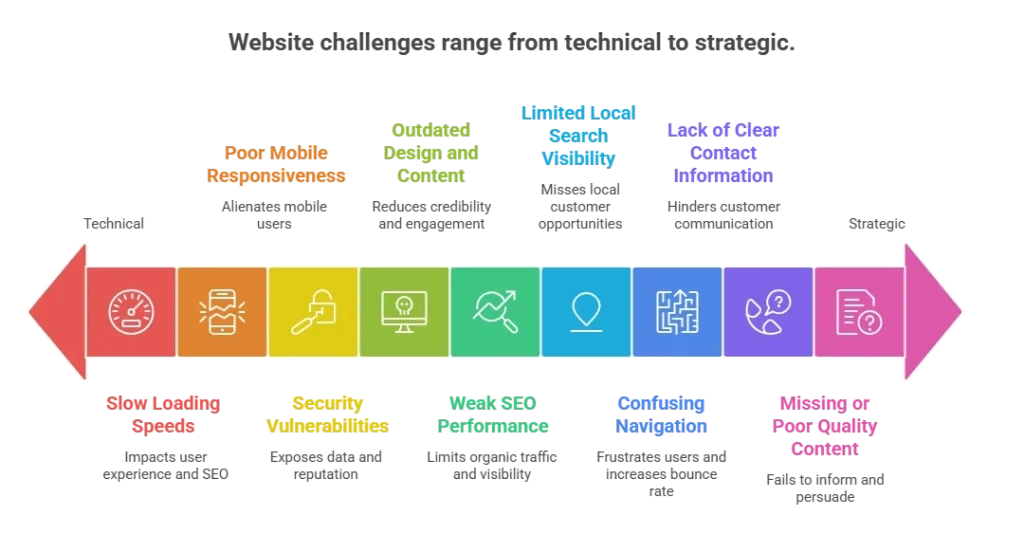
A business website serves as the front door to success. However, many downtown businesses struggle with website challenges that prevent them from reaching their full potential. These issues can significantly impact customer experience, search engine rankings, and ultimately, revenue.
Moreover, local businesses in the downtown area face unique obstacles when it comes to their online presence. From technical problems to design flaws, these challenges require immediate attention. Fortunately, every problem has a solution, and addressing these issues can transform a struggling website into a powerful business tool.
Challenge 1: Slow Loading Speeds
One of the most common website challenges faced by businesses around downtown areas involves slow page loading times. When a website takes more than three seconds to load, visitors often leave immediately. Consequently, businesses lose potential customers before they even see the products or services offered.

The Fix:
Optimize images by compressing them without losing quality. Additionally, enable browser caching to store frequently accessed data. Furthermore, consider upgrading hosting plans to accommodate traffic demands. Many local businesses see immediate improvements after implementing these changes.
Challenge 2: Poor Mobile Responsiveness
Nowadays, over 60% of web traffic comes from mobile devices. However, many downtown business websites were built years ago when desktop browsing dominated. These sites display incorrectly on smartphones and tablets, creating frustrating user experiences.

The Fix:
Implement responsive design that automatically adjusts to different screen sizes. Moreover, test the website on various devices before launching updates. Similarly, ensure buttons and links are easily clickable on touchscreens. This investment pays off through increased mobile conversions.
Challenge 3: Outdated Design and Content
Visual appeal matters tremendously in the digital space. Unfortunately, websites with outdated designs immediately signal unprofessionalism to visitors. Besides, old content containing incorrect information or expired promotions damages credibility.

The Fix:
Refresh the website design every 2-3 years to maintain modern aesthetics. Additionally, schedule regular content audits to remove outdated information. Furthermore, add fresh blog posts and updates to show the business remains active and engaged.
Challenge 4: Weak SEO Performance
Many downtown businesses remain invisible in local search results due to poor search engine optimization. Without proper SEO, potential customers searching for relevant services never discover these businesses. Consequently, valuable traffic goes to competitors instead.

The Fix:
Start with keyword research to understand what local customers search for online. Then, optimize page titles, meta descriptions, and headers with relevant keywords. Additionally, create location-specific content that targets downtown audiences. Also, claim and optimize the Google Business Profile to improve local visibility.
Challenge 5: Limited Local Search Visibility
Local search optimization differs from general SEO strategies. Downtown businesses need to appear in “near me” searches and local map packs. However, many companies overlook this crucial aspect of digital marketing.

The Fix:
Ensure NAP (Name, Address, Phone) consistency across all online directories. Moreover, encourage satisfied customers to leave positive reviews on Google and other platforms. Furthermore, create location pages that specifically mention neighborhood landmarks and areas served. These tactics significantly boost local search rankings.
Challenge 6: Security Vulnerabilities
Website security protects both the business and its customers. Nevertheless, many local business websites lack basic security measures like SSL certificates. This oversight exposes sensitive information to potential threats and damages customer trust.

The Fix:
Install an SSL certificate to enable HTTPS encryption immediately. Additionally, keep all software, plugins, and themes updated regularly. Furthermore, implement strong passwords and two-factor authentication for admin access. These steps create a secure environment for online transactions.
Challenge 7: Confusing Navigation and User Experience
Visitors should find information effortlessly on any business website. Unfortunately, complex navigation menus and unclear call-to-action buttons create confusion. As a result, potential customers leave without taking desired actions.

The Fix:
Simplify navigation menus to include only essential pages. Moreover, place clear contact information and service descriptions in prominent locations. Similarly, add obvious call-to-action buttons that guide visitors toward conversion goals. Testing with real users helps identify remaining pain points.
Challenge 8: Lack of Clear Contact Information
Surprisingly, some business websites make it difficult to find contact details. This simple oversight frustrates customers who want to reach out for inquiries or appointments. Therefore, accessibility becomes a critical factor in website success.

The Fix:
Display phone numbers and email addresses in the header or footer of every page. Additionally, create a dedicated contact page with multiple communication options. Furthermore, consider adding live chat functionality for immediate assistance. Making contact easy increases customer engagement significantly.
Challenge 9: Missing or Poor Quality Content
Content drives search engine rankings and customer engagement. However, thin content with little value fails to attract or retain visitors. Moreover, grammatical errors and poorly written text damage professional credibility.

The Fix:
Develop comprehensive content that answers customer questions thoroughly. Additionally, use clear language that resonates with the target audience. Furthermore, include relevant images, videos, and infographics to enhance engagement. Quality content establishes authority and builds trust with potential customers.
Challenge 10: No Clear Value Proposition
Many business websites fail to communicate what makes them unique. Visitors need to understand immediately why they should choose one business over competitors. Without a clear value proposition, conversions suffer dramatically.

The Fix:
Craft a compelling headline that highlights the main benefit offered. Moreover, support this message with specific examples and customer testimonials. Additionally, showcase unique selling points prominently on the homepage. This clarity helps visitors make confident purchasing decisions.
Measuring Success After Implementing Fixes
After addressing these website challenges, businesses should track important metrics. Monitor website traffic, bounce rates, and conversion rates regularly. Additionally, pay attention to search engine rankings for targeted keywords. These indicators reveal whether the fixes produce desired results.
Furthermore, gather customer feedback about the improved website experience. This information provides valuable insights for continued optimization efforts. Remember, website improvement is an ongoing process rather than a one-time project.
The Role of Professional Help
While some fixes require technical expertise, business owners can implement many solutions themselves. However, complex issues might benefit from professional web developers or digital marketing agencies. These experts bring specialized knowledge and save valuable time.
Nevertheless, understanding these challenges helps business owners make informed decisions. Whether hiring professionals or tackling improvements independently, awareness leads to better outcomes. The investment in website quality always pays dividends through increased customer satisfaction and revenue growth.
Final Words
Website challenges faced by businesses around downtown areas require immediate attention and strategic solutions. From slow loading speeds to poor mobile responsiveness, these issues directly impact customer experience and business success. However, implementing the fixes outlined above transforms struggling websites into powerful marketing tools.

Moreover, addressing these challenges improves search engine rankings, making businesses more visible to local customers. The competitive downtown marketplace demands an excellent online presence, and a well-optimized website provides that competitive edge. Furthermore, regular maintenance and updates ensure continued performance and relevance.
Therefore, business owners should prioritize website optimization as an essential investment in long-term growth. By fixing these common challenges, downtown businesses position themselves for sustained success in the digital marketplace. The time to act is now, as every day with an underperforming website means lost opportunities and revenue.
FAQs
Q1: How long does it take to fix common website challenges?
Simple fixes like updating content or improving images can be completed in days. However, comprehensive solutions involving redesign or technical optimization may require 2-4 weeks depending on complexity.
Q2: What is the most critical website challenge to address first?
Mobile responsiveness should be the top priority since majority of users browse on smartphones. Following that, focus on page loading speed and security improvements for immediate impact.
Q3: How much should businesses budget for website fixes?
Costs vary widely based on the extent of issues. Basic improvements might cost $500-$2,000, while complete redesigns can range from $3,000-$15,000. Many businesses start with essential fixes and expand gradually.
Q4: Can businesses fix website challenges without technical expertise?
Yes, many solutions like content updates, image optimization, and basic SEO improvements require minimal technical knowledge. However, complex issues benefit from professional assistance to ensure proper implementation.
Q5: How often should downtown businesses update their websites?
Content should be reviewed monthly, while design refreshes work best every 2-3 years. Security updates and software patches need attention immediately when available to maintain protection.
Stay connected with us for more digital marketing insights! Have any queries? Contact our team today for a free website audit and discover how we can help your downtown business thrive online.