Yes, and it is happening faster than most practice owners expect. An AI receptionist answers every call to a dental clinic within seconds, books appointments directly into the practice schedule, handles routine questions about services, hours, and insurance, and follows up automatically when a call goes unanswered. For a busy clinic, the front desk stops being a bottleneck and starts working like a growth channel.
This is not about pushing your team out. It is about making sure no patient ever reaches a voicemail greeting at the exact moment they decided to book.
What an AI Receptionist Actually Handles Day to Day
Think of it as a phone operator that never sleeps, never puts anyone on hold for ten minutes, and never forgets to write the message down. On a normal day, it takes care of the repetitive call work that eats up your front desk hours.
Calls it takes off your plate
- Answering every inbound call, including evenings, weekends, and holidays
- Booking, rescheduling, and cancelling appointments in real time
- Answering common questions about treatments, pricing ranges, location, and parking
- Verifying insurance details before the visit
- Texting confirmations and reminders to cut down no-shows
- Calling back missed callers within minutes, automatically
Where your team still wins
The staff you already have stays focused on the patients standing in front of them: warm check-ins, treatment coordination, and the personal reassurance that keeps patients loyal. That is where a human touch matters most, and no software replaces it.
The After-Hours Problem Most Clinics Ignore
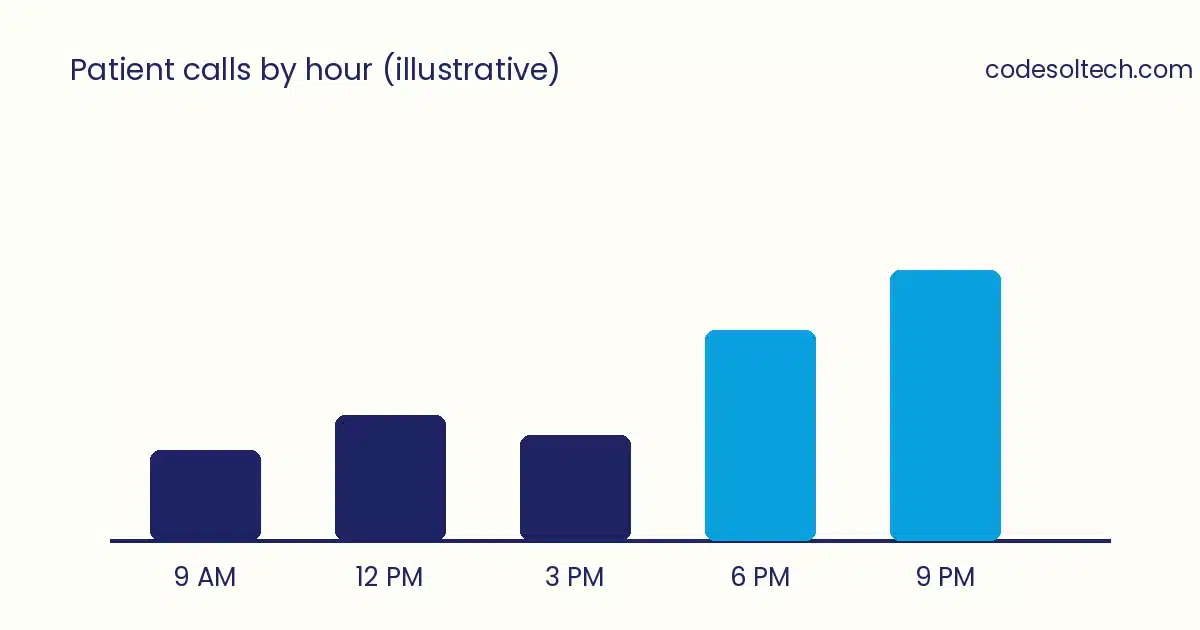
Here is the uncomfortable part. A large share of new-patient calls comes in outside office hours. Someone with a cracked tooth searches at 9 PM, calls the first two clinics on Google, and books with whoever picks up. If that is a voicemail, they move on.
Why speed wins new patients
This is not just a hunch. A landmark study by InsideSales.com found that 78% of buyers purchase from the company that responds to their inquiry first. In dentistry, responding first often means simply answering the phone. Separate research by Google and Ipsos reported that 70% of mobile searchers have used click-to-call to connect with a business directly from search results, which means the call often happens seconds after the search.
Most practices have no idea how many of these calls they miss, because a missed call leaves no trace in the appointment book. It just looks like a quiet week. AI receptionists close this gap completely by treating 9 PM on a Sunday exactly like 10 AM on a Tuesday.
The Real Cost of a Front Desk Compared to AI
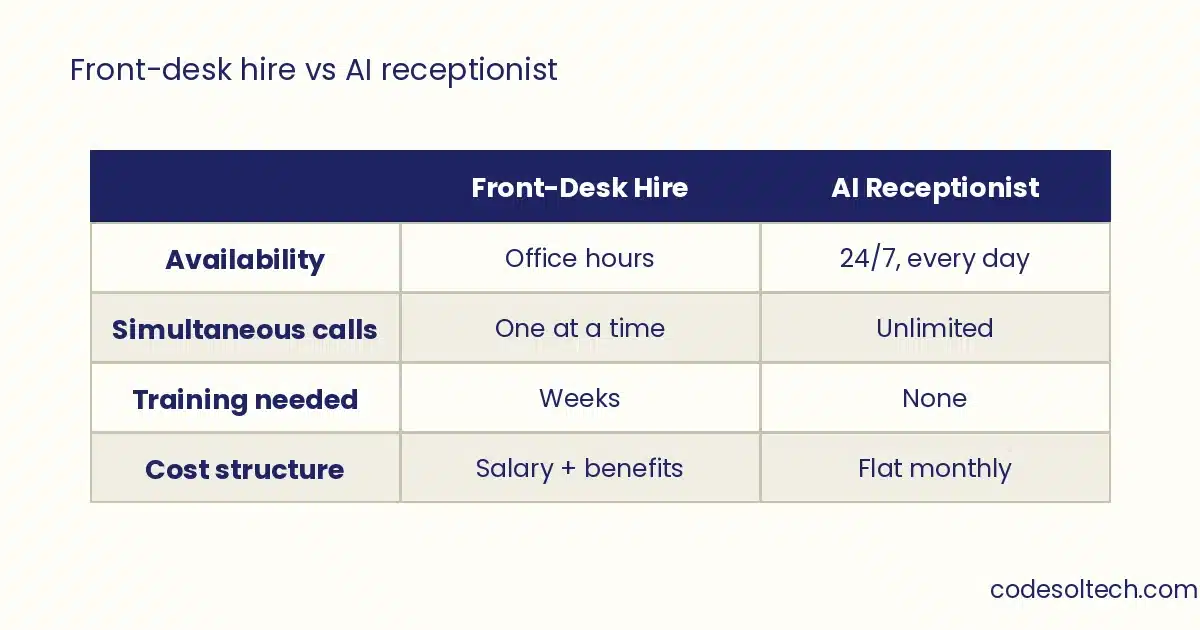
What a front-desk hire really costs
- Salary plus benefits, every month, whether the phone rings or not
- Weeks of training before a new hire is genuinely useful
- Turnover: SHRM estimates that replacing an employee can cost six to nine months of their salary, and front-desk roles turn over fast
- One call at a time, with sick days, lunch breaks, and holidays built in
What changes with AI
- Flat monthly pricing that does not grow with call volume
- Unlimited simultaneous calls, so nobody ever hears a busy tone
- No training period and no turnover
- Full coverage on nights, weekends, and holidays
That does not make human staff obsolete. It changes what you hire them for. Instead of paying someone to answer the same five questions all day, you keep your team for check-ins, treatment coordination, and the personal reassurance that keeps patients loyal.
How Appointment Booking Works in Practice
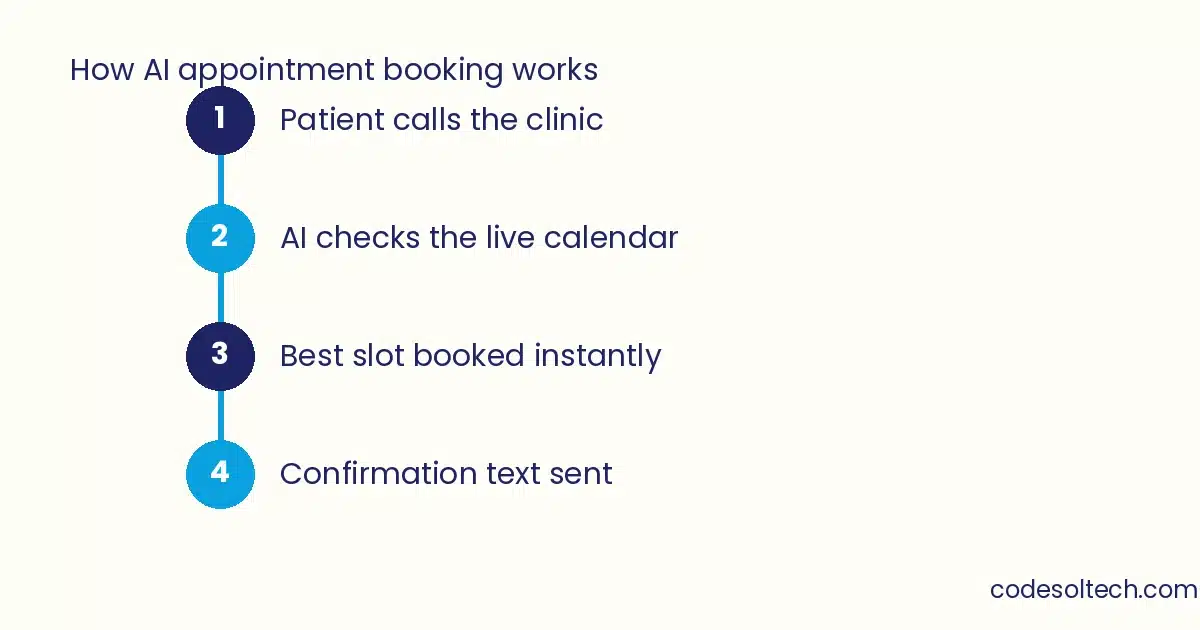
The part clinic owners ask about most is the scheduling itself. Modern AI receptionists connect directly with practice management software such as Dentrix, Eaglesoft, or Open Dental. That connection is what makes the whole thing work.
The booking flow, step by step
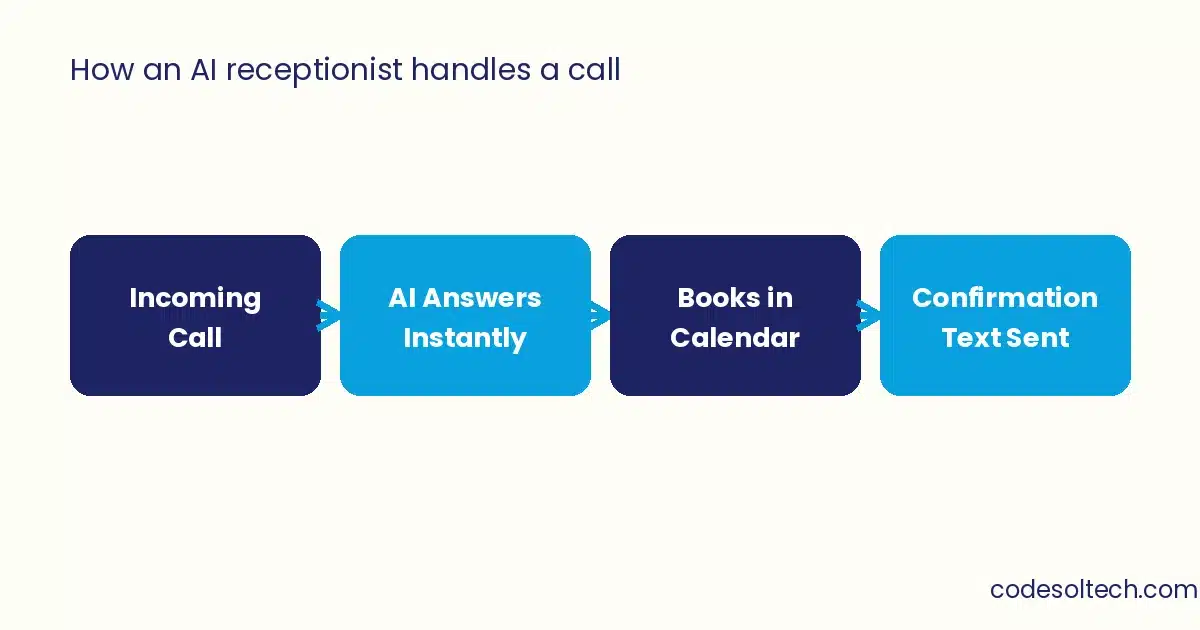
- The patient calls and the AI answers within seconds
- The system checks real availability in your practice software
- Open slots are offered and the visit is booked on the spot
- A confirmation text goes out before the call ends
- Reschedules later follow the same flow, with zero staff involvement
Reminders that cut no-shows
Automatic reminders go out before every visit, which is where practices see the biggest drop in empty chairs. At CodeSol, we build websites for dental clinics with online booking baked in from day one, so the phone system and the website pull in the same direction instead of working as two separate islands.
What to Check Before Choosing an AI Receptionist
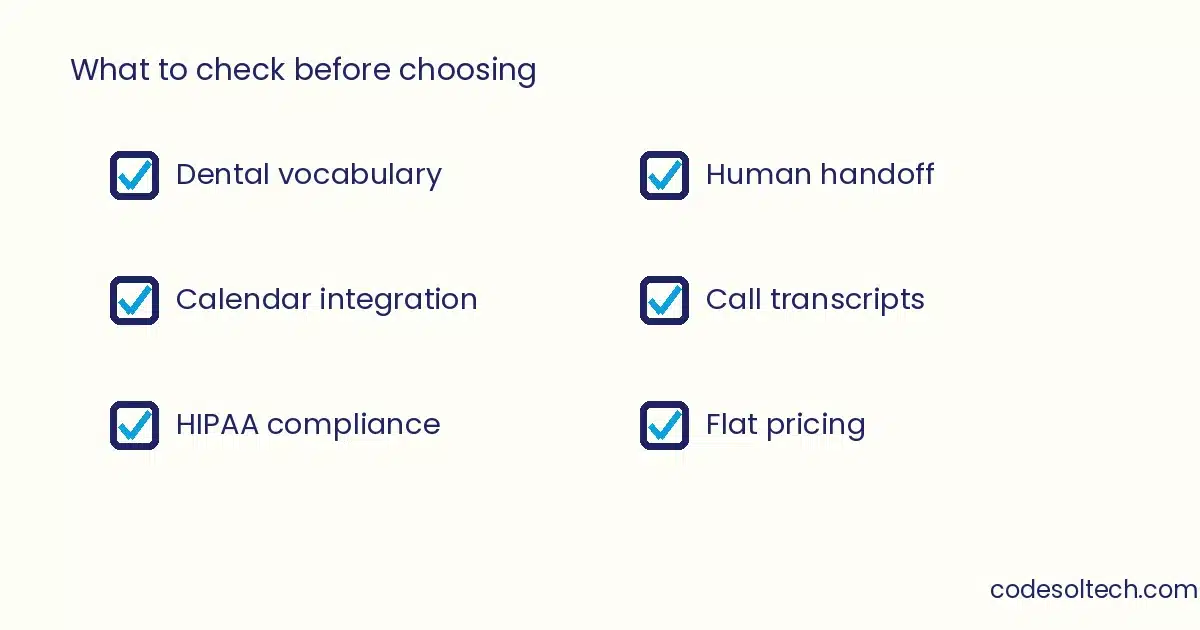
Not every system is built for dentistry. A generic answering service will struggle with treatment-specific questions and scheduling rules.
Must-have features
- Dental vocabulary. It should understand terms like crown, root canal, Invisalign, and cleaning versus deep cleaning.
- Schedule integration. If it cannot read and write to your practice software, it is just a voicemail with extra steps.
- HIPAA compliance. Patient calls involve health information. The provider must sign a business associate agreement.
- Human handoff. There must be a clean way to transfer tricky calls to a real person without making the patient repeat everything.
- Call transcripts. You should be able to read what was said on any call, especially in the first weeks.
- Clear pricing. Flat monthly pricing beats per-minute billing, which punishes you for being popular.
Red flags to avoid
- Per-minute billing with no monthly cap
- No HIPAA business associate agreement on offer
- No call transcripts or recordings for review
- No clean handoff path to a human agent
Rolling It Out Without Disrupting the Practice
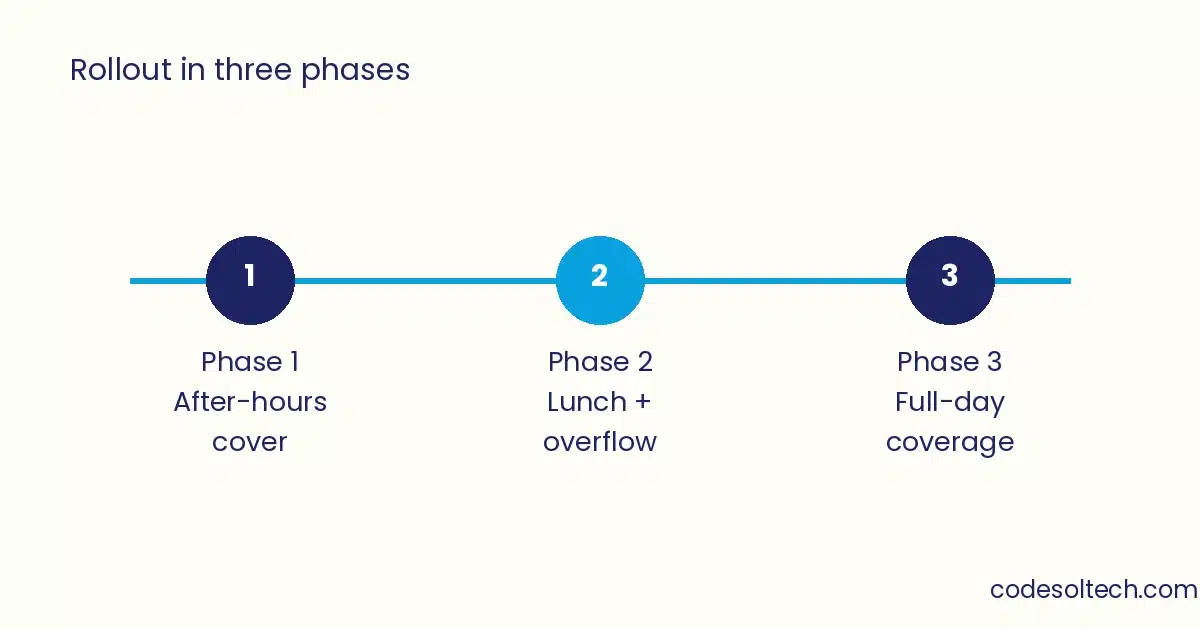
Phase 1: after-hours and overflow
The smoothest rollouts start small. Most clinics begin with after-hours and overflow coverage only, keeping the daytime phones exactly as they are. That alone usually recovers enough missed appointments to pay for the system.
Phase 2: expand once the team trusts it
After two or three weeks of reading transcripts, practices expand to full-day coverage or lunch-hour relief. Tell your staff early what is changing and why. Framed correctly, nobody hears “replacement.” They hear “you will never have to apologize for a missed call again.”
Pairing this with proper workflow automation across the practice, from online intake forms to recall campaigns, turns the phone system from a standalone tool into part of one connected patient pipeline.
The Bottom Line for Dental Practices
Patients judge a clinic by how easy it is to reach. An AI receptionist makes your practice reachable at every hour, books the appointment while the patient is still motivated, and frees your team for the work only humans can do. Clinics that adopt it early are not cutting corners. They are removing the one bottleneck every growing practice hits: the phone.
If you are thinking about modernizing how your clinic handles calls, bookings, and patient follow-up, talk to our team. We help dental practices combine smart websites with automation that actually fills chairs.
Want an AI receptionist for your clinic?