
Running a small business in Austin comes with enough challenges without adding unnecessary complications. However, many local businesses and SMEs unknowingly create problems by adopting too many software tools and platforms.
While technology should simplify operations, using too many tools for small businesses often leads to unexpected expenses that drain resources and reduce efficiency. The promise of each new app or platform sounds appealing. Therefore, business owners keep adding more tools to their stack.
Nevertheless, this approach frequently backfires, creating a tangled web of subscriptions, integrations, and workflows that cost far more than anticipated.
Understanding the Tool Sprawl Problem
Tool sprawl happens when businesses accumulate multiple software solutions without a clear strategy. Consequently, teams end up juggling numerous platforms for tasks that fewer, more comprehensive systems could handle. Additionally, this creates confusion about which tool to use for specific tasks.
Small businesses in Austin particularly struggle with this issue. In fact, research shows that the average small business uses between 10 and 15 different software tools. Moreover, many of these tools overlap in functionality, creating redundancy and waste.
1. Subscription Fees That Add Up Quickly
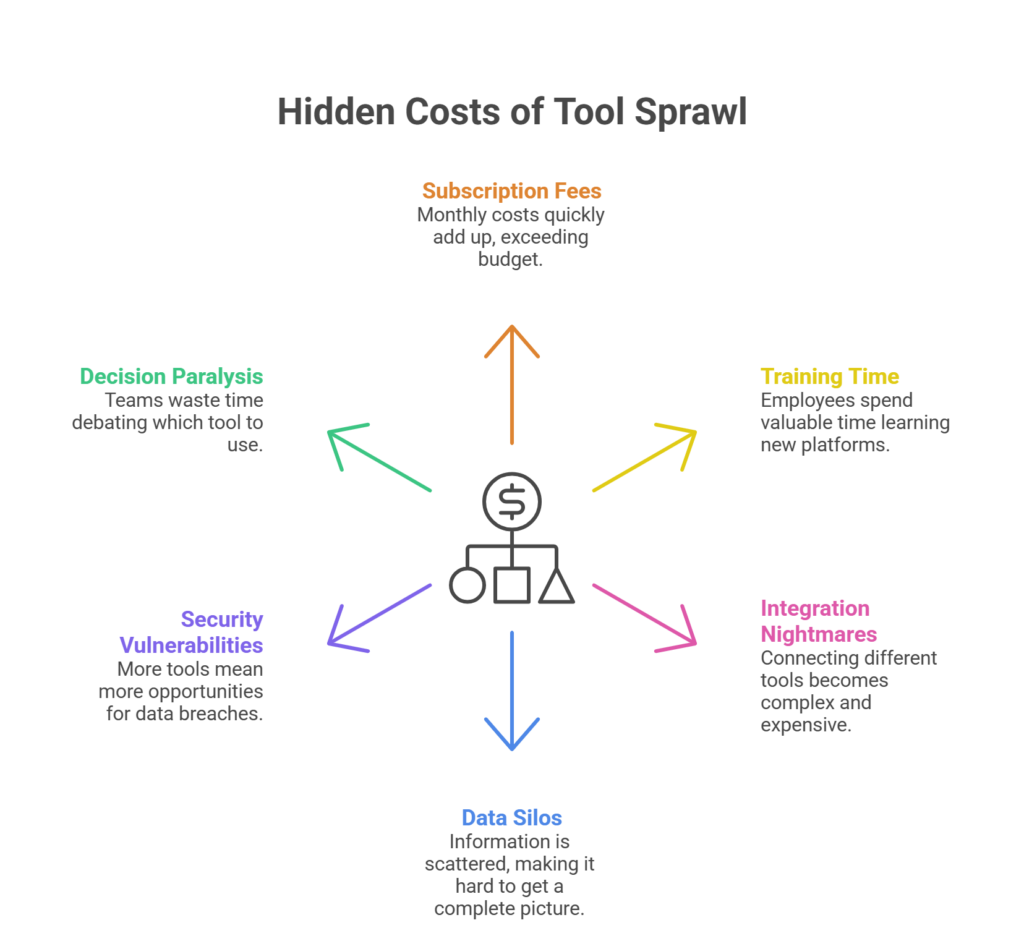
The first hidden cost of using too many tools for small businesses involves subscription fees that multiply faster than expected. Each tool might seem affordable at $10, $20, or $50 per month. However, when you add up 10 or 15 subscriptions, monthly costs can easily exceed $500 to $1,000.
Furthermore, these costs often increase over time. Software companies regularly raise prices, add new tiers, or introduce features that require upgrading. As a result, that $15 monthly tool from last year might now cost $25 or more.
Many Austin-based SMEs discover they’re spending thousands of dollars annually on tools they rarely use. Subsequently, this money could have been invested in marketing, hiring, or improving products and services. Therefore, conducting regular audits of software subscriptions becomes essential for controlling costs.
2. Training Time and Employee Productivity Loss
Another significant hidden cost involves the time required to train employees on multiple platforms. Each new tool requires learning curves, tutorials, and practice before teams become proficient. Consequently, productivity drops during these transition periods.
Moreover, when businesses use too many tools, employees waste valuable time switching between applications. This constant context-switching reduces focus and efficiency. Studies indicate that workers lose up to 30% of their productivity when frequently moving between different software platforms.
Additionally, new hires face steeper onboarding challenges when they must learn numerous tools simultaneously. This extended training period delays their ability to contribute effectively. Therefore, businesses pay for slower ramp-up times and reduced output during those critical first weeks.
3. Integration Nightmares and Technical Debt
Using too many tools for small businesses creates integration challenges that become increasingly expensive to solve. Different platforms often don’t communicate well with each other. As a result, businesses need middleware solutions, custom APIs, or manual data transfers to connect their systems.
Furthermore, maintaining these integrations requires ongoing technical support. When one tool updates its software, integrations might break, requiring immediate attention and repair. Consequently, businesses either hire IT staff or pay external consultants to manage these connections.
Technical debt accumulates when systems become so complex that making changes becomes risky and expensive. Subsequently, businesses find themselves trapped with outdated tools because replacing them would disrupt too many connected systems. This creates a costly cycle that’s difficult to escape.
4. Data Silos and Duplication Issues
When information gets scattered across too many tools for small businesses, data silos emerge. Each platform stores different pieces of customer information, project details, or business metrics. Therefore, getting a complete picture of operations becomes nearly impossible.
Additionally, data duplication creates its own problems. The same customer information might exist in your CRM, email platform, accounting software, and project management tool. However, these copies rarely stay synchronized, leading to inconsistencies and errors.
Moreover, employees waste significant time searching for information across multiple platforms. If someone needs to find a client’s complete history, they might check five different tools. Consequently, this inefficiency costs money in lost productivity and potentially lost business opportunities.
5. Security Vulnerabilities and Compliance Risks
Each additional tool introduces new security risks for small businesses. Every platform requires separate login credentials, creating more opportunities for data breaches. Furthermore, employees often resort to weak passwords or password reuse when managing too many accounts.
Additionally, different tools have varying security standards and compliance certifications. Therefore, ensuring consistent data protection across all platforms becomes challenging. For Austin businesses handling customer data, this could lead to GDPR, CCPA, or other compliance violations.
Moreover, tracking data access and maintaining audit trails becomes exponentially harder with multiple tools. When security incidents occur, identifying the source and extent of breaches takes longer. Consequently, businesses face potential fines, legal costs, and reputation damage.
6. Decision Paralysis and Strategic Confusion
Perhaps the most overlooked cost of using too many tools for small businesses involves decision-making difficulties. When teams have numerous options for accomplishing tasks, they waste time debating which tool to use. Subsequently, this decision fatigue slows down projects and reduces agility.
Furthermore, having too many analytics platforms creates confusion about which metrics matter most. Different tools might report similar statistics differently, making it unclear which numbers to trust. Therefore, strategic planning suffers when leadership lacks confidence in their data.
Additionally, tool sprawl often indicates a lack of overall business strategy. Companies that continuously add new platforms without retiring old ones demonstrate reactive rather than proactive management. Consequently, this approach leads to wasted resources and missed opportunities for streamlined operations.
Solutions for Austin SMEs
Small businesses in Austin can address these hidden costs by conducting thorough tool audits. First, list all current subscriptions and their costs. Then, identify overlapping functionalities and redundant platforms. Next, prioritize tools that serve multiple purposes or integrate seamlessly with existing systems.
Moreover, consider comprehensive platforms that replace several single-purpose tools. Many modern business suites offer CRM project management, communication, and automation features in one package. Therefore, consolidating to fewer, more powerful platforms reduces complexity and costs.
Additionally, establish clear criteria before adopting new tools. Ask whether the platform solves a genuine problem, integrates with current systems, and provides sufficient value to justify its cost. Furthermore, require trial periods to test functionality before committing to long-term contracts.
Conclusion
The hidden costs of using too many tools for small businesses extend far beyond monthly subscription fees. From training time and integration nightmares to security risks and decision paralysis, tool sprawl creates expensive problems that undermine efficiency and profitability.

Austin-based SMEs can protect their resources by regularly auditing their technology stack, consolidating platforms where possible, and adopting a more strategic approach to software selection. By simplifying their tool ecosystem, small businesses can redirect savings toward growth initiatives while improving operational efficiency.
Ultimately, less can truly be more when it comes to business software, allowing teams to focus on what matters most: serving customers and building sustainable success.
Also Explore: Look how Disconnected Systems Create Operational Bottlenecks for SMEs
FAQ
How many tools should a small business use?
There’s no magic number, but most efficient small businesses operate well with 5-7 core platforms that integrate seamlessly. Focus on comprehensive solutions rather than single-purpose tools to minimize complexity while meeting operational needs.
What’s the best way to reduce tool sprawl?
Start by auditing current subscriptions and identifying overlapping features. Then, consolidate to platforms that serve multiple purposes. Cancel underused tools and establish clear approval processes for adopting new software in the future.
How can I calculate the true cost of my business tools?
Add up all subscription fees, then factor in training time, IT support costs, integration expenses, and productivity losses from context-switching. Many businesses discover their actual tool costs are 2-3 times higher than subscription fees alone.
When should I add a new business tool?
Only add new tools when they solve a specific, documented problem that existing platforms can’t address. Require trial periods, check integration capabilities, and calculate total cost of ownership before committing to long-term contracts.
Are free tools worth using for small businesses?
Free tools can work for startups with limited budgets, but they often come with restrictions, security concerns, and hidden costs like advertising or limited features. Evaluate whether paid alternatives offer better value through improved efficiency and support.
Stay connected with us. Have any queries? Reach out to discuss how consolidating your business tools can save money and boost productivity for your Austin-based SME.